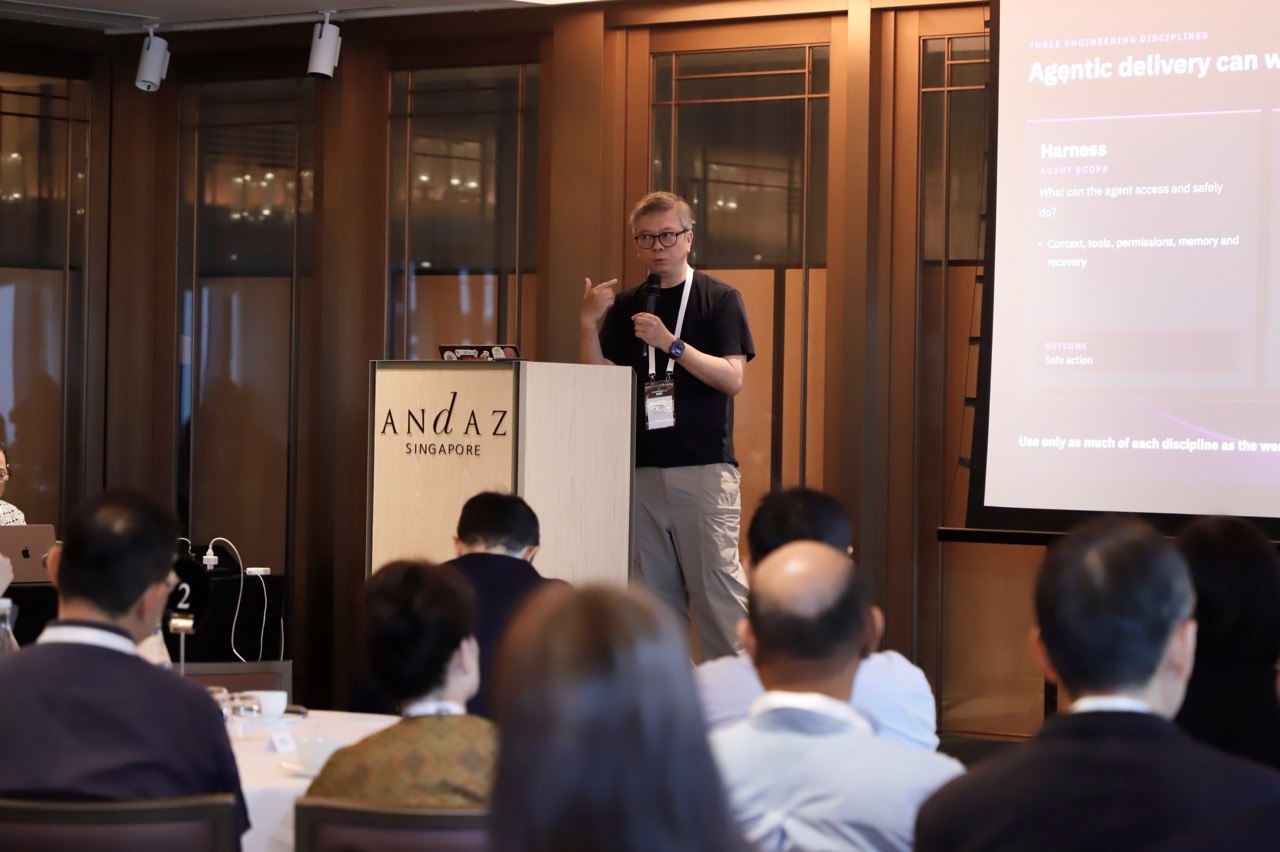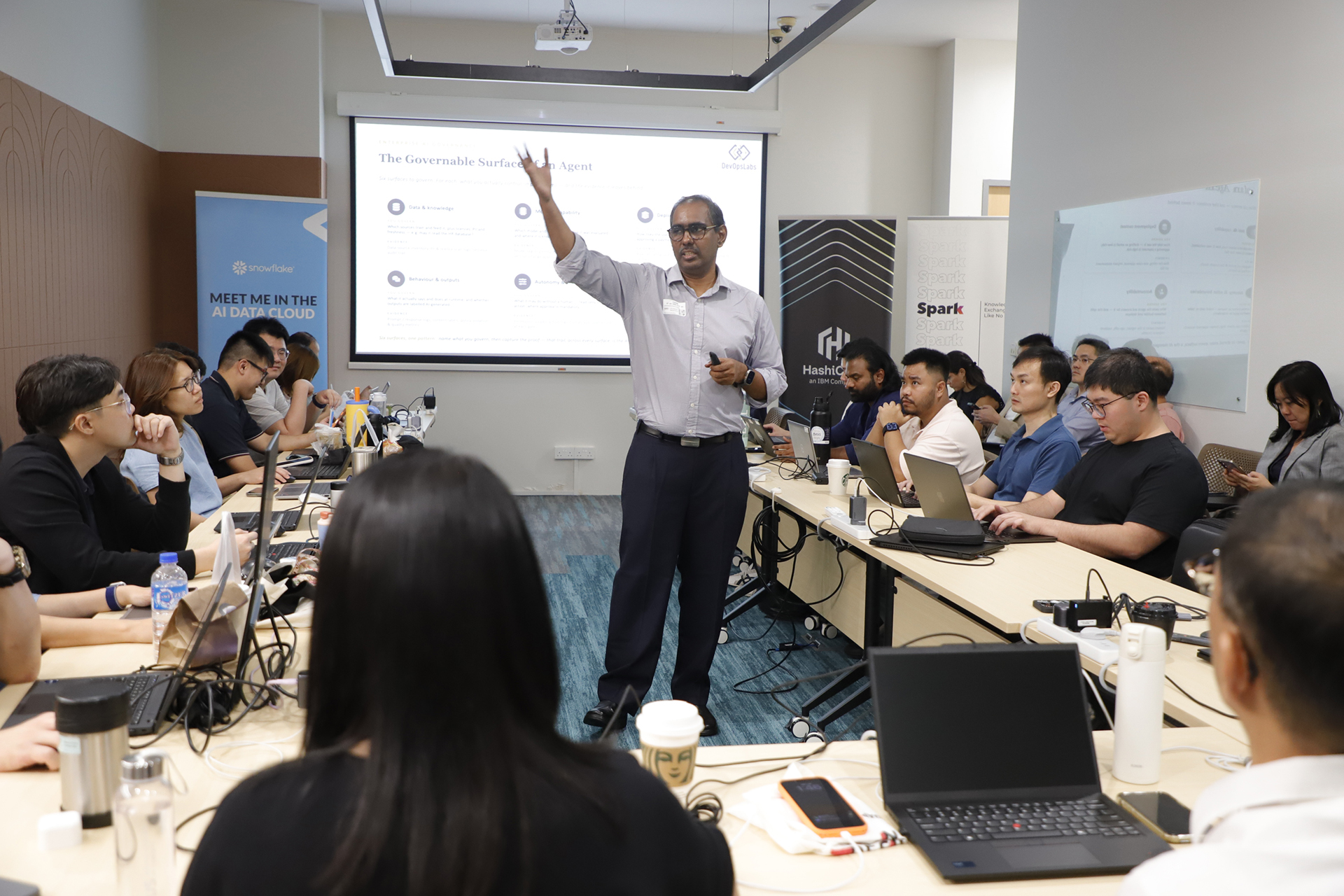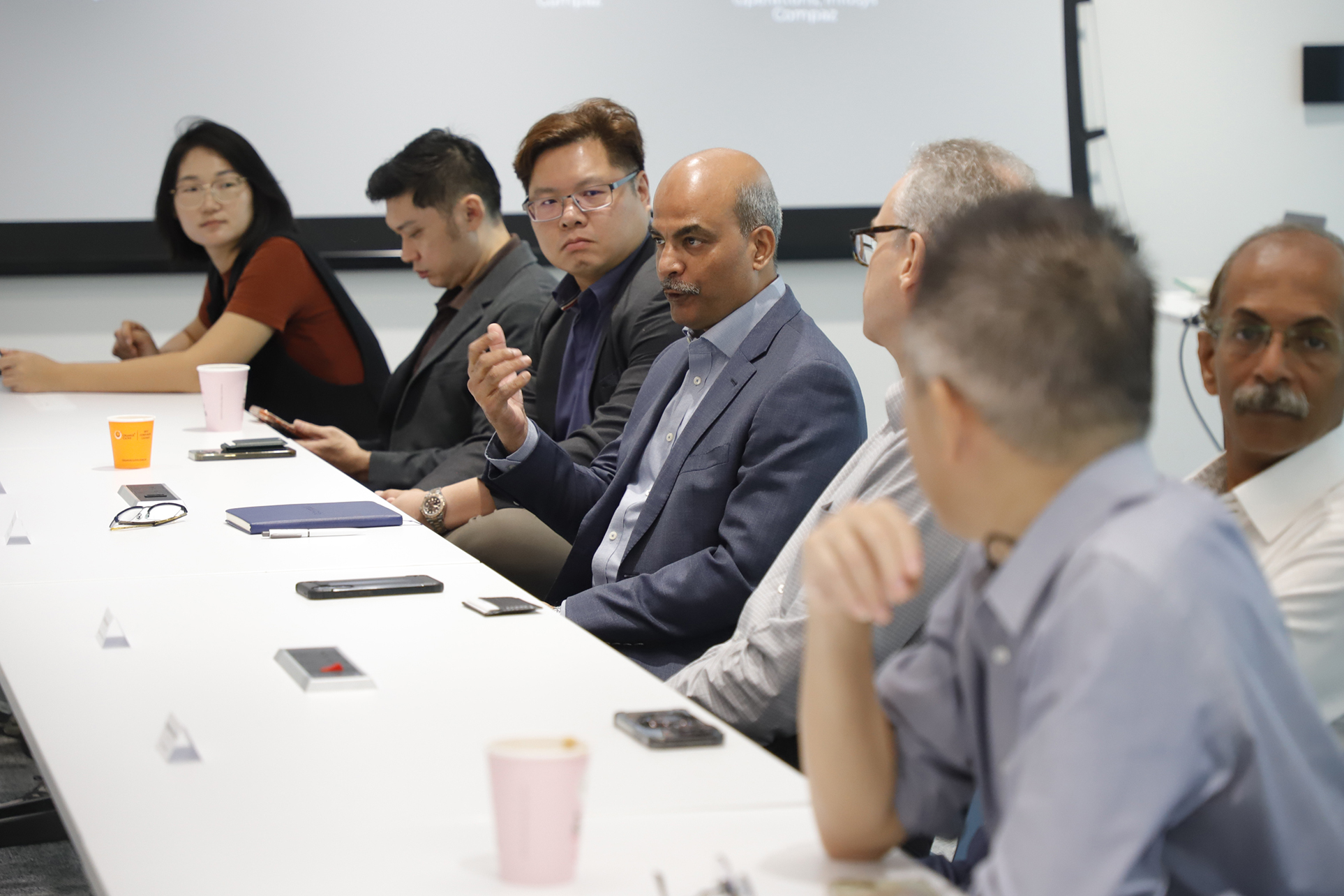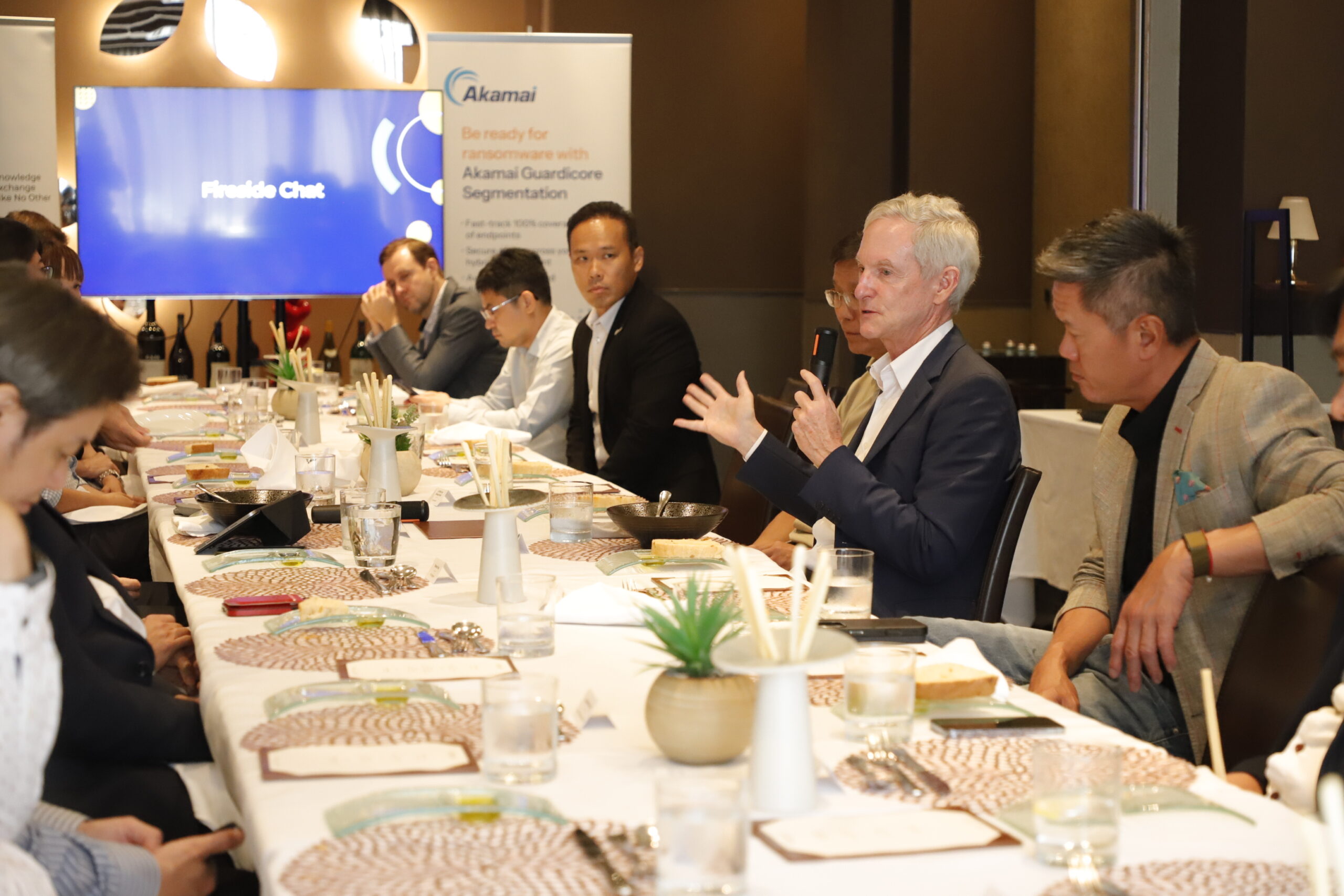
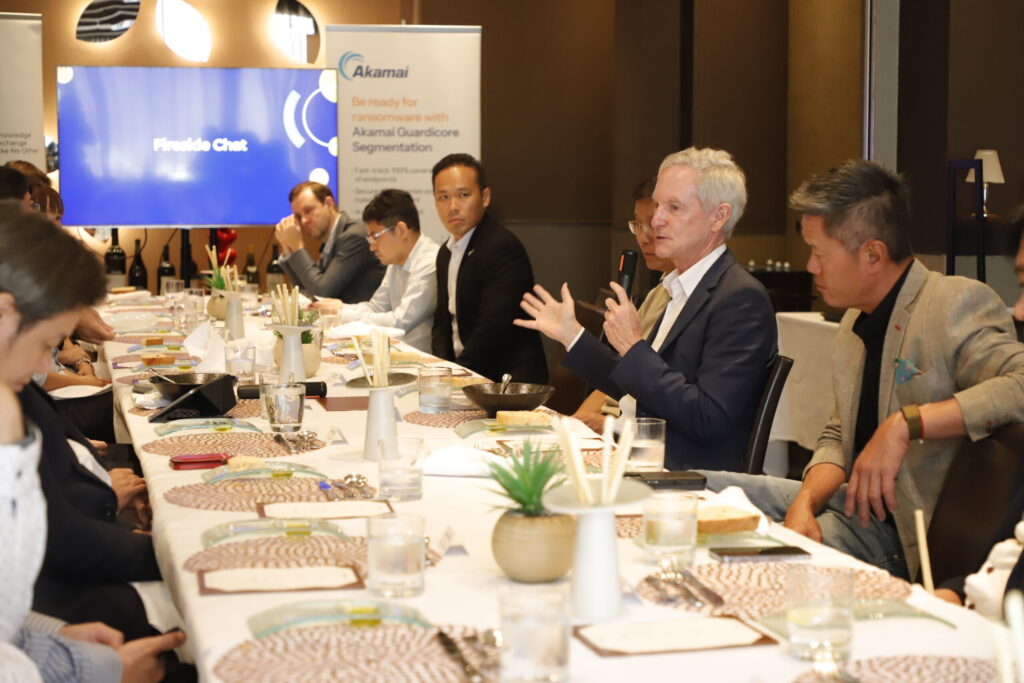
At the recent SPARK Leaders’ Lunch Circle, held in partnership with Akamai Technologies, senior leaders from across Singapore’s enterprise and critical infrastructure ecosystem gathered for a closed-door conversation with Dr. Tom Leighton, CEO and Co-Founder of Akamai.
The session explored a question becoming increasingly urgent for technology leaders: as AI becomes real-time, agentic, personalised, and embedded into everyday digital experiences, what infrastructure will be required to scale it safely?
From AI Capability to Enterprise Impact
Dr. Leighton described a near future where digital experiences become far more personalised, interactive, and media-rich.
Fitness classes can be translated and localised in real time. Online shoppers may see themselves wearing a product before buying it. Cruise customers can explore experiences through AI-generated video. Healthcare interactions may increasingly involve AI-generated interfaces that support real-time medical engagement.
While these examples may appear consumer-facing, their enterprise implications are profound. If every interaction becomes personalised, conversational, video-enabled, and agent-driven, infrastructure must deliver far more than compute. It must deliver performance, resilience, sovereignty, security, and trust at the same time.
Why Proximity Matters in the AI Era
The discussion then moved from AI capability to distributed intelligence.
In the early stages of generative AI, users tolerated slow responses because the technology was novel. As models become faster, that tolerance will disappear. Once AI can generate responses in tens of milliseconds, the bottleneck is no longer only model performance. It is proximity.
For organisations serving customers across markets, latency is not a technical inconvenience. It becomes a business constraint. The more AI shifts toward real-time voice, video, agentic workflows, and immersive experiences, the more important it becomes to bring compute closer to users and data.
Distributed infrastructure is therefore not simply about speed. It is about enabling AI to function reliably where people actually use it.
Sovereign AI and Local Context
The same logic applies to sovereign AI.
During the fireside discussion, David Chin noted that Southeast Asia places particular emphasis on cultural, linguistic, and religious sensitivity. Organisations may need AI systems that reflect local context, while still delivering seamless digital experiences.
The future of AI infrastructure will not be a simple choice between cloud and on-premise. It will require orchestration across cloud, edge compute, distributed containers, serverless functions, and security layers designed around proximity, workload type, cost, and risk.
Managing the Economics of AI at Scale
The discussion also highlighted the economic pressure that will come with AI at scale.
Text generation is only the beginning. As AI moves deeper into video, 3D environments, personalised media, and physical AI use cases, token and compute economics will become far more complex.
Dr. Leighton pointed to approaches such as semantic caching, where systems interpret whether a question has effectively already been answered, reducing the need to repeatedly call expensive models.
This points to a broader lesson: AI scale will require not only more infrastructure, but smarter infrastructure. Organisations will need to route workloads intelligently, reuse context where appropriate, cache outputs where possible, and assign workloads to the most efficient resources available.
The winners will be those that manage performance, cost, and reliability as a single operating discipline.
Security as a Foundation, Not an Add-On
Yet the most urgent part of the conversation centred on security.
AI is expanding enterprise opportunity, but it is also expanding the attack surface. Dr. Leighton described how attackers are using AI to identify vulnerabilities more quickly, exploit legacy code, and take advantage of devices that may never be patched.
Bot armies are becoming larger and more distributed. Internally, organisations face growing risks from shadow AI, prompt manipulation, sensitive data leakage, and tools that may not have been properly vetted.
This is why security can no longer be treated as a layer added after innovation. In the AI era, security must be engineered into the architecture from the beginning.
Designing for Breach, Resilience and Control
Several ideas stood out during the roundtable.
First, organisations must assume that breaches or unintended behaviours may occur, and design systems to limit the blast radius. Microsegmentation, zero trust access, API visibility, browser-level controls, and AI-specific runtime protections are becoming essential because autonomous agents may act across systems faster than human teams can manually intervene.
Second, agent traffic must be understood with greater precision. Some agents may represent authenticated users. Some may be search agents, scraping agents, or attacking agents. Each requires a different response.
The future of digital trust will depend on whether organisations can identify who or what is interacting with their systems, what they are authorised to do, and how quickly unusual behaviour can be detected.
Using AI as Part of the Defence
AI must also become part of the defence.
Participants noted that traditional segmentation and policy management can be complex to maintain. AI can help by discovering what exists inside the environment, recommending communication rules, identifying anomalies, and explaining compliance concerns in human language.
Used well, AI can reduce operational complexity rather than add to it.
The Leadership Challenge for Technology Leaders
For technology leaders, the leadership challenge is clear.
Organisations cannot simply block AI adoption, because the business demand is already here. But they also cannot allow uncontrolled AI usage to spread across the enterprise.
The path forward is a shared responsibility model where users are empowered to innovate, while guardrails guide behaviour without slowing the organisation down.
This requires board-level awareness, stronger support for CISOs, clearer governance, and a shift from prevention-only thinking toward resilience. The question is whether organisations can detect, contain, explain, and recover quickly enough to maintain trust.
Closing Thoughts
The session made one point especially clear: the cloud alone is no longer enough to define the next decade of enterprise architecture.
As AI becomes distributed, agentic, media-rich, and operationally embedded, organisations will need infrastructure that is equally distributed, intelligent, secure, and resilient.
Distributed intelligence will reshape how enterprises serve customers, protect systems, manage cost, and govern AI across borders. The organisations that move ahead will understand that performance, security, sovereignty, and trust are now inseparable.
In the AI era, architecture is strategy. The decisions leaders make today will determine not only how fast their organisations can innovate, but how safely and confidently they can scale intelligence into the future.