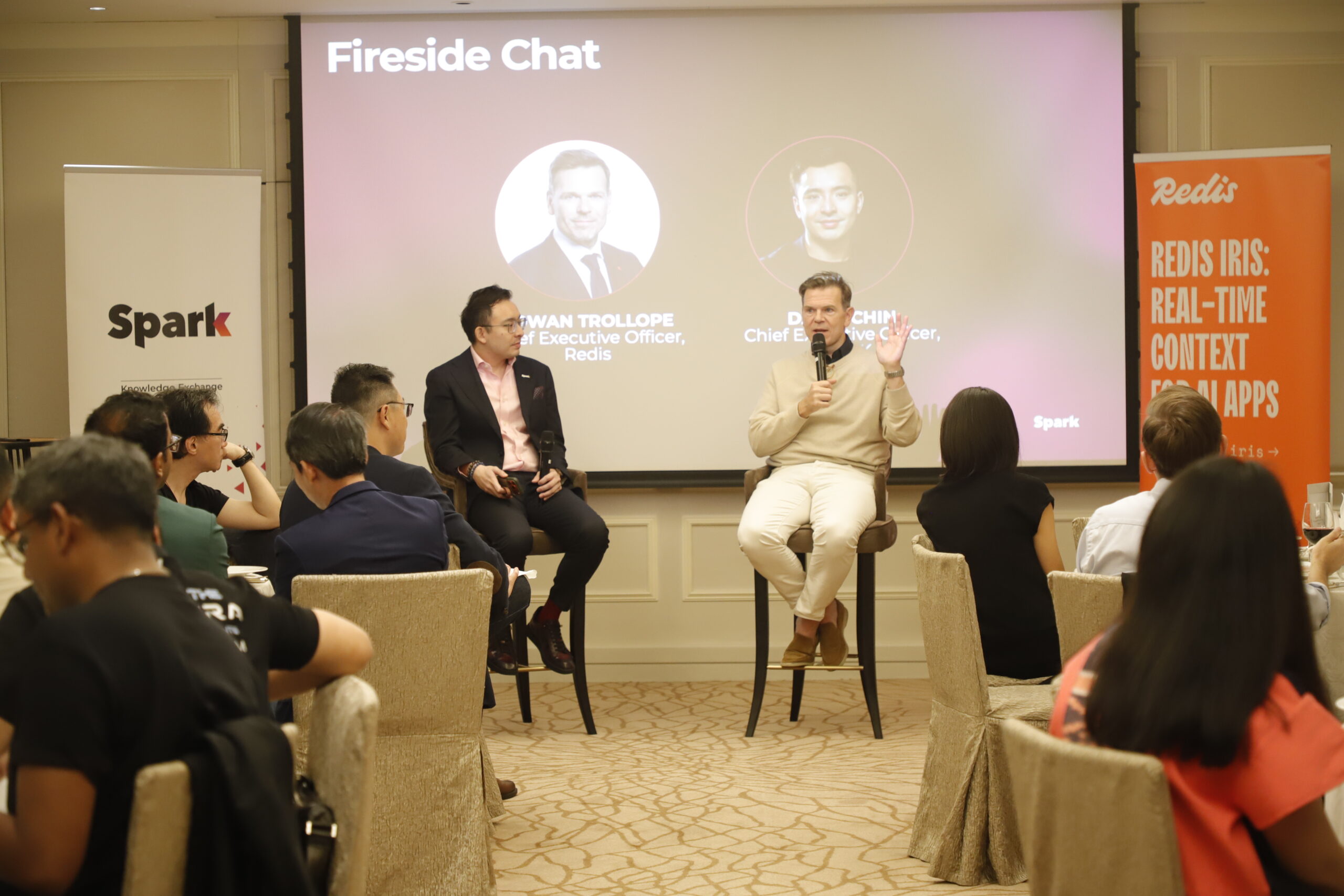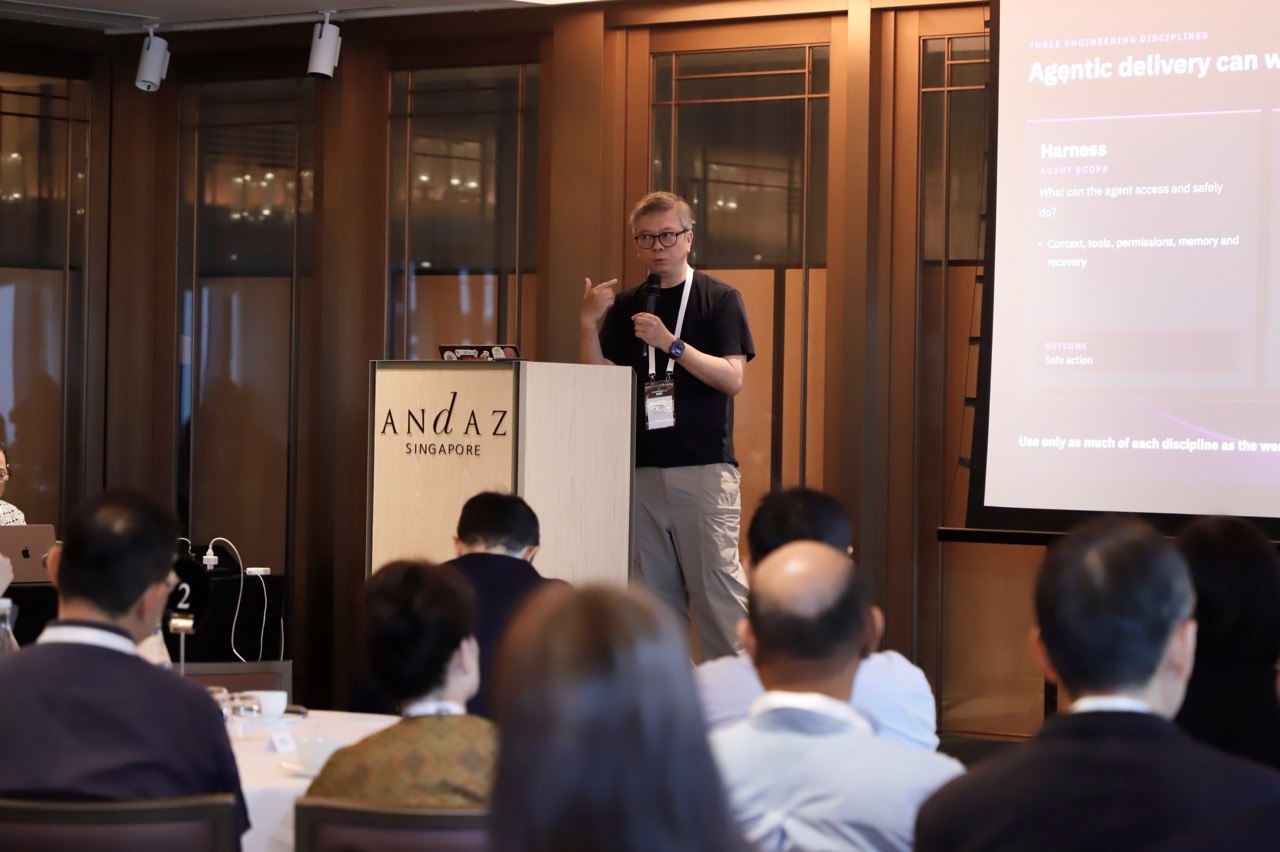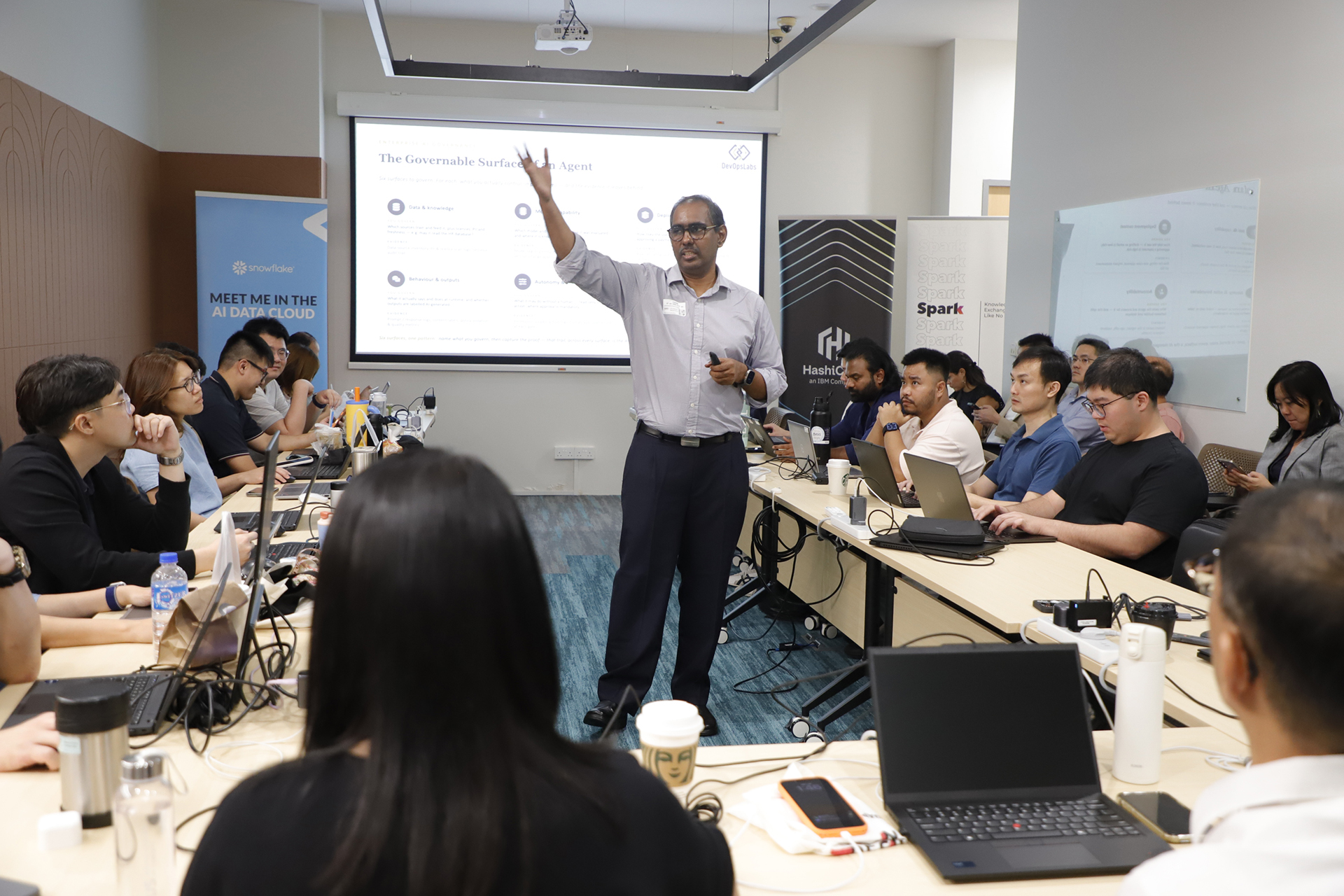
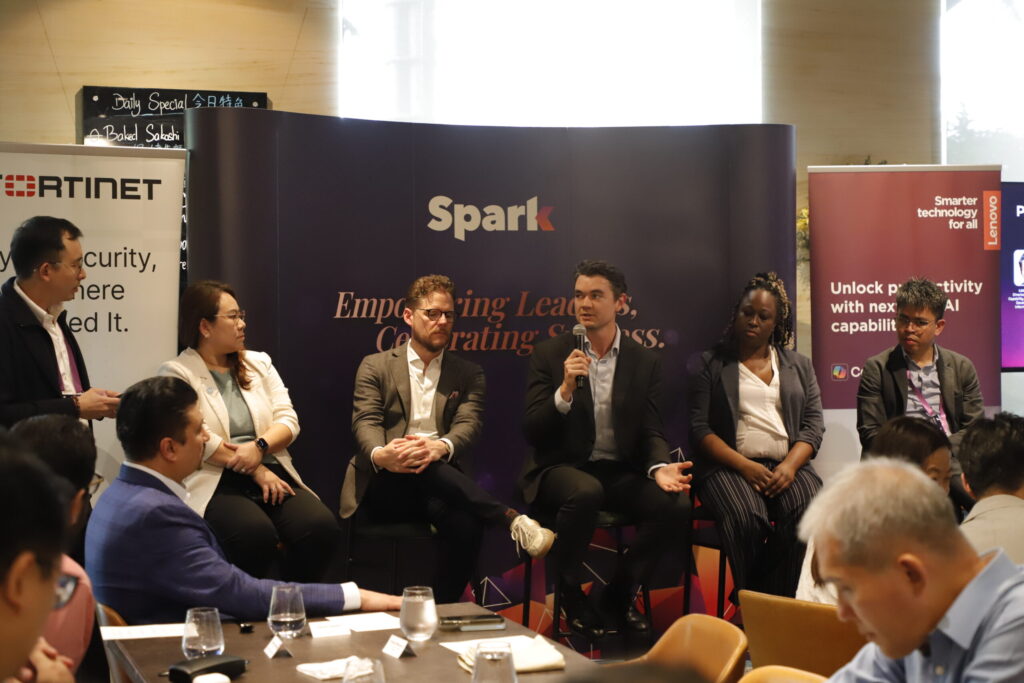
The conversation around enterprise Artificial Intelligence has officially shifted. At the SPARK Community Lunch-N-Learn, held during ATxSummit 2026, global technology experts, public sector leaders, and senior executives converged on a single, definitive truth: the era of generative AI experimentation is over. The organisations pulling ahead are those treating autonomous agentic AI not as a tech feature or a simple chatbot assistant, but as an entirely new corporate operating model.
A distinct divergence is appearing in the marketplace, splitting companies into two categories: those compounding value through repeatable, governed production systems, and those permanently trapped in a loop of single-digit pilot programmes .
The Scale Gap: Singapore’s Leading Financial Institution vs The Typical Enterprise
Individual productivity gains are already undeniable, with enterprise AI users saving up to an hour a day and solo founders building multi-million dollar ventures overnight by letting agents handle up to 85% of execution workflows.
However, at the corporate scale, the gap expands exponentially:
- The Frontrunners: Forward-thinking institutions like Singapore’s leading financial institution have successfully operationalised over 430 production use cases with more than 2,000 active models in service . This architecture has driven an audited S$1 billion in AI-attributable corporate value, reflecting a massive 33% year-over-year economic increase .
- The Standard Enterprise: Conversely, the average enterprise remains stagnant, stuck with fewer than 10 uncoordinated pilots, no clear reporting on model inventories, and financial returns too marginal to break out on a balance sheet .
Moving from a handful of pilots to hundreds of compounding production workflows requires an organisation to execute three core strategic moves: architecting genuine autonomy, managing token economics, and treating AI governance as a form of engineering reliability .
1. Architect Autonomy: Build Workflow Owners, Not Assistants
The first failure point for most organisations is a lack of ambition in system design. True scale requires shifting away from generic chatbots, FAQs, and search boxes . Instead, autonomous agents must be designed to act like experienced new hires within their first six months, taking complete, multi-step ownership of high-volume workflows with structured inputs and concrete, end-to-end outcome delivery .
Case Study: Workflow Ownership in Action
A stellar example of workflow ownership is GovTech’s ScamShield triage agent. Rather than simply assisting a human operator, the agent autonomously processed 2.11 million scam checks and 832,000 formal reports, contributing directly to a 27.6% year-over-year drop in overall scam cases across Singapore. If a workflow can be articulated clearly within an internal job description, it can be translated directly into an agent’s technical role.
Smashing the Centralised Bottleneck
Furthermore, scaling these agents requires abandoning the traditional centralised bottleneck where a single team builds for everyone . Instead, a lean central team should provide only the baseline platform and strict compliance guardrails, enabling individual business units to author and deploy their own specialised agents using plain natural language descriptions . This decentralized mandate allowed biotech giant Moderna to successfully build and deploy 750 custom GPT use cases across legal, R&D, and manufacturing teams in a mere 60 days .
2. Economise: Treat Compute and Tokens as a Managed Budget
Pilot economics lie because running small tests on a corporate credit card masks structural operational expenses . Multi-step agentic workflows multiply input and output tokens 5x to 20x over a single standard LLM call due to deep reasoning loops, big tool retrieval schemas, failures, and retries . Without strict infrastructure controls, unmanaged deployments quickly burn through resources, a reality discovered when software engineers at Uber rapidly exhausted their annual AI budget via unmonitored agentic coding tools .
The Playbook for AI FinOps
The playbook for building an economically viable AI portfolio relies on three distinct operational levers :
- Model Routing: Pass routine steps to fast, low-cost models, reserving expensive, frontier foundational models strictly for complex tasks that justify the expense .
- Context Discipline: Summarise, trim, and cache historical data context natively instead of stuffing lengthy, raw multi-turn transcripts into every call .
- Output Accountability: Stop tracking generalized IT infrastructure lines . Every token must be tied to a distinct, measurable KPI, measuring the exact cost per successfully resolved corporate outcome .
3. Resilience: AI Governance is the New SRE
Data compiled from global research institutions like MIT and Gartner highlights a sobering reality: 95% of generative AI pilots fail to deliver measurable P&L impact, and over 40% of agentic AI projects stall out entirely during active deployment . These implementations stall not because the underlying large language models lack capability, but because the necessary production-level operating disciplines are missing .
Structural Disciplines for Production
To survive long-term deployment, organisations must approach AI governance through the lens of Site Reliability Engineering (SRE). This operational framework demands four strict architectural disciplines :
- Observability: Every single action, query, and call an agent executes must be securely logged, queryable, and auditable .
- Least-Privilege Access: Agents must operate on a read-only default basis, granting write access to enterprise tools or systems only where explicitly required by the workflow boundaries .
- Failure Design: The most dangerous autonomous systems are those that hallucinate with high confidence. Systems must be engineered to stop, gracefully fail, and immediately escalate to human operators the moment they hit unexpected data barriers .
- Accountability Ownership: Eradicate abstract department or team oversight. Every single production agent deployed across an enterprise requires a named, human owner explicitly responsible for its outputs, cost, and regular operational reviews .
4. The Foundations: Security, Cloud, and Data Trust
Scaling agentic workflows inevitably expands an enterprise’s cybersecurity attack surface, as internal data stores and legacy operational tools are exposed to autonomous systems. Security operations must introduce active, runtime AI security guardrails that monitor inputs and outputs simultaneously. This means prioritising AI runtime protection alongside standard network defence, shielding the deployed agent networks from novel prompt manipulation and accidental sensitive data leakages.
Full-Stack Cloud Integration
Ultimately, an enterprise cannot build a scalable portfolio of hundreds of use cases on standalone model access alone. As demonstrated by full-stack cloud orchestration frameworks like Lenovo xIQ, enterprise AI scale requires integrated, multi-cloud computing frameworks, second-level auto-scaling optimisations, and intelligent operational monitoring tools .
The Dependency of Data Trust
This entire full-stack ecosystem relies on data trust. If an enterprise cannot verify its underlying data assets, its agentic outputs will remain fundamentally unreliable. True transformation begins with high-quality data lineage, clear system traceability, and an early operational partnership between technical engineering teams and core business line leaders.
5. The Mandate for Leadership
Every quarter of delayed execution is a quarter of compounding value that an enterprise can never recover. Senior executive leadership must walk away from the experimentation phase with three clear, actionable parameters established for the coming week :
- Set a Production Target: Move past counting sandboxes. Define the exact number of production-grade workflows you target for the next 12 months, and aggressively audit your current deployment gaps .
- Control the Budget Line: Treat token consumption as a managed, operational headcount salary line. Review the cost per resolved corporate outcome monthly .
- Appoint Named Owners: Eliminate generalised team accountability. Assign a specific individual to be explicitly answerable for the behaviour, safety, and reliability of every active production agent.