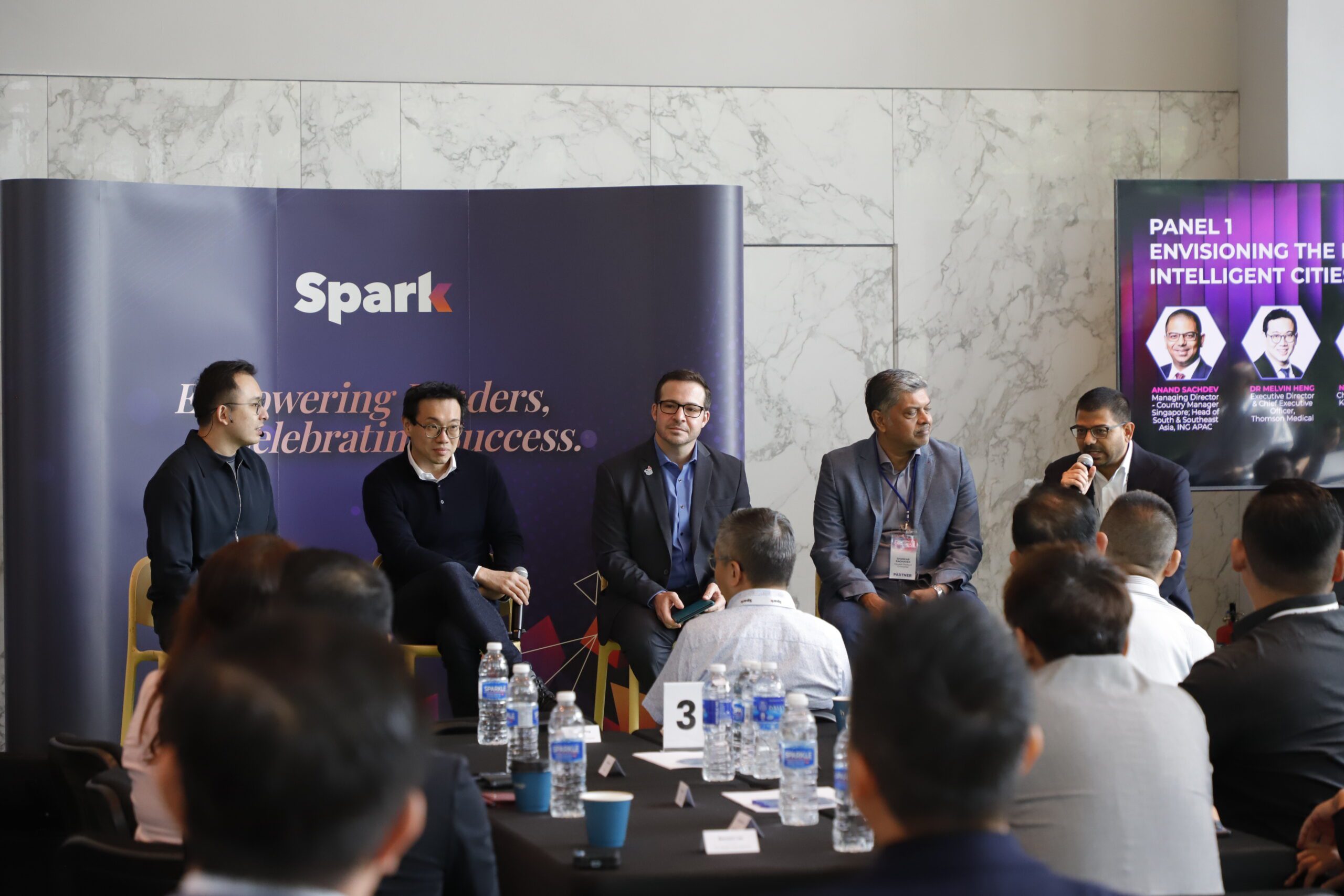
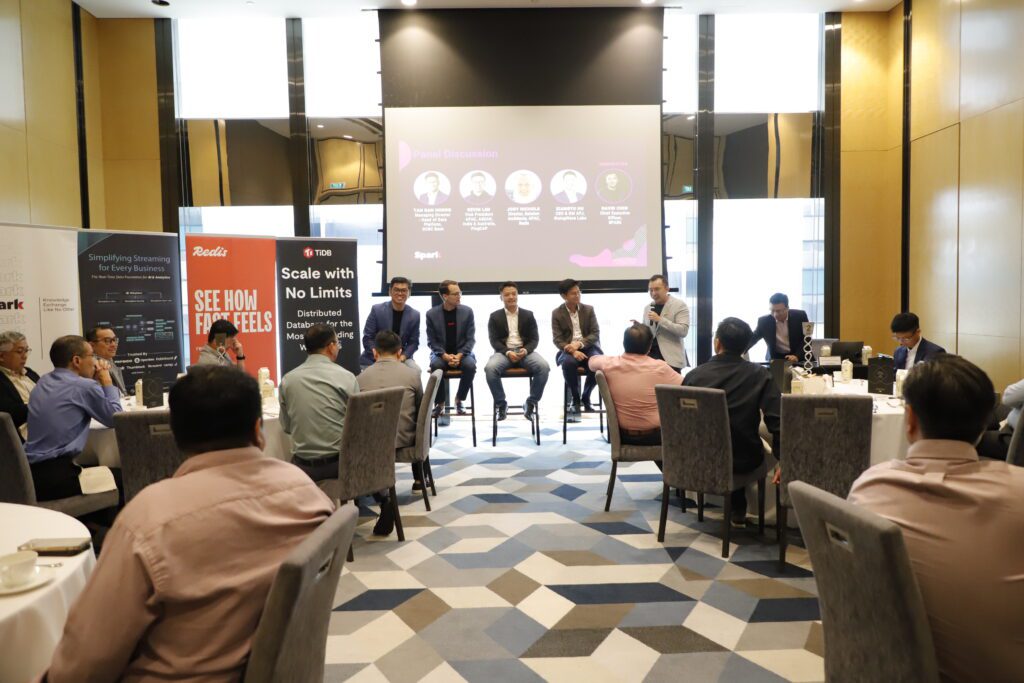
On 29 January 2026, SPARK, in partnership with Infocomm Media Development Authority (IMDA), convened senior technology and business leaders for a closed-door executive workshop on what it takes to become a composable enterprise in a world shaped by AI, real-time operations, and event-based decisioning.
The session moved beyond composable architecture as a theoretical concept. Instead, the discussion focused on operational realities, what has to change inside the organisation, how to modernise without disruption, and what “AI-ready” foundations look like in practice.
Why composable now: three shifts reshaping enterprise foundations
In the opening framing, SPARK highlighted three structural shifts that are raising the bar for enterprise digital platforms:
- Velocity shift: As machine-to-machine workflows grow, latency expectations tighten. What was acceptable at 1–2 seconds becomes unacceptable when multiple automated processes interact end-to-end.
- Context shift: Data inputs are no longer limited to structured records or keyword search. Enterprises are increasingly working across multimodal and meaning-based data, including text, voice, images, and semantic context.
- Freshness shift: T+1 batch data is no longer sufficient for many high-impact use cases. Leaders are seeing growing demand for real-time intelligence to support decisions based on “what just happened,” not yesterday.
A recurring tension emerged from the room: boards want AI outcomes now, while data and platform modernisation remains a multi-year effort. The key question was how to manage a two-speed transformation responsibly.
Practitioner keynote: Composable enterprise at national scale (Changi Airport Group)
The practitioner keynote by Joe Chiu, Information Technology Consultant, Changi Airport Group (CAG) grounded the workshop in a real-world transformation story. He shared how CAG moved away from single-vendor, end-to-end builds that created lock-in and change-request costs, toward a layered platform approach designed to accelerate delivery while maintaining governance and security.
Key ideas from CAG’s journey included:
- Decoupling for speed: A shift from monolithic builds toward microservices and reusable enterprise components so teams can build applications faster without reinventing core services.
- A shared “enterprise digital hub” approach: CAG invested in common layers such as identity and authentication, digital maps, content services, APIs and microservices, and an enterprise data platform, allowing business teams to focus on front-end experience and business logic.
- Governance behind the scenes: While the cultural principle was framed as “trust them, not control,” CAG emphasised strong access controls, authentication, auditability, and role-based data permissions, especially given the sensitivity of customer and operational datasets.
- Measurable delivery outcomes: A highlighted example was an arrival passenger flow simulation built as an MVP in three weeks, enabling operational forecasting and scenario planning.
CAG’s use cases illustrated how composable foundations support both operational excellence (situational awareness and proactive service recovery) and commercial outcomes (Customer 360, campaign analysis, personalised engagement, and advanced analytics).
Partner spotlights: three layers of the composable stack
Before the panel discussion, each IMDA-accredited technology partner delivered a 10-minute presentation offering perspectives across different layers of the composable enterprise:
- Kevin Lim (PingCAP) discussed how distributed SQL architectures help enterprises scale horizontally and reduce operational complexity caused by manual sharding, especially when workloads grow unpredictably.
- Jody Nichols (Redis) shared how low-latency data layers support responsive digital experiences and can help manage AI costs through caching and semantic approaches that reduce unnecessary calls to LLMs.
- Xiangyu Hu (RisingWave Labs) outlined the move from batch analytics to continuous intelligence, where streaming architectures process data continuously and enable real-time triggers, detection, and decisioning.
Across the three perspectives, a consistent theme emerged: composable capability is built through specialised components that interoperate cleanly, rather than a single platform attempting to do everything.
Panel discussion: balancing real-time ambition with governance and cost
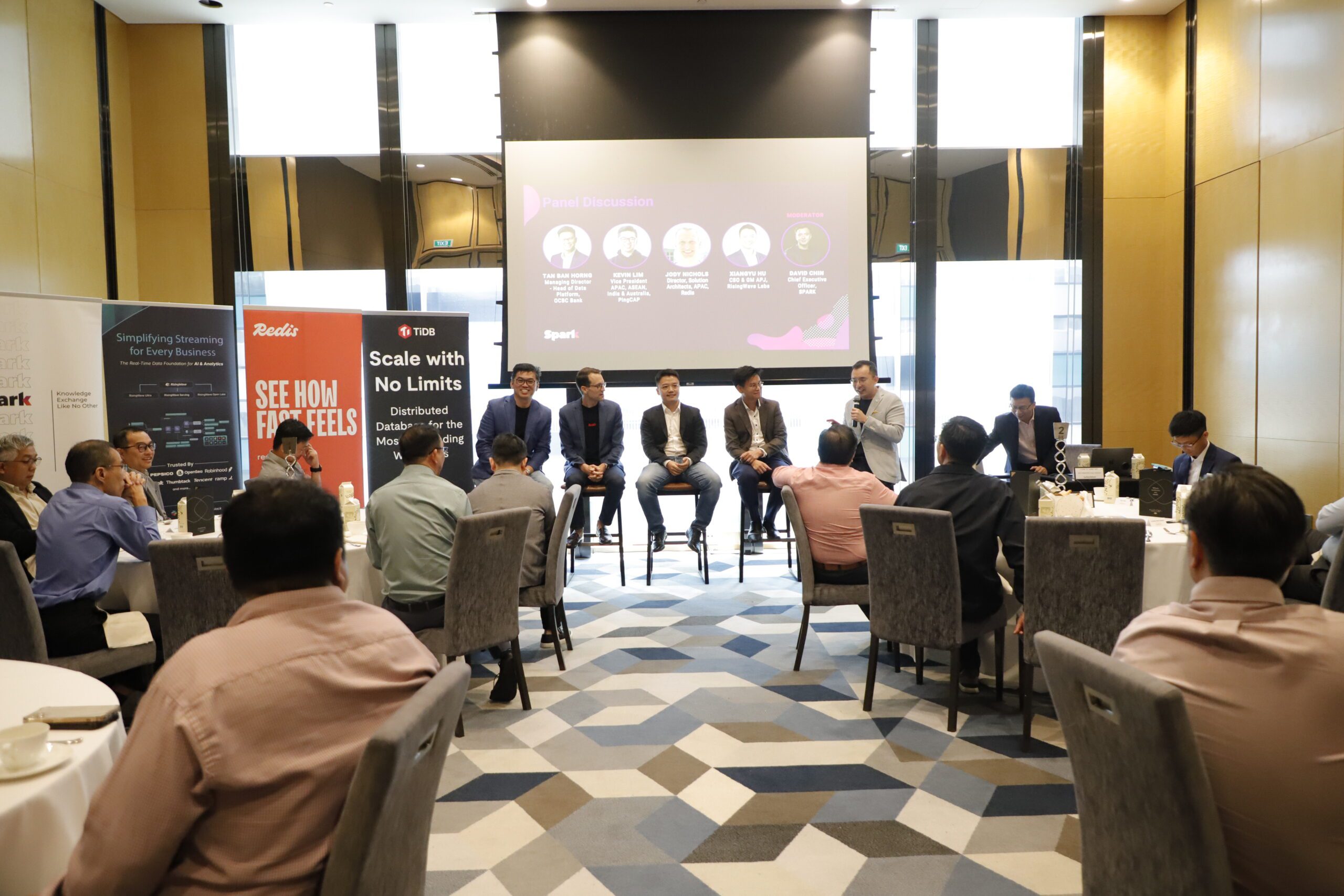
The workshop concluded with a panel discussion featuring Tan Ban Horng, Managing Director and Head of Data Platform, OCBC Bank, alongside the three technology partners, moderated by David Chin, CEO of SPARK.
Several pragmatic realities surfaced:
- Microservices is an architectural decision and an operating model decision. Decoupling requires changes in how talent is organised, how teams deliver features, and how accountability is assigned.
- Not everything should be real-time. Leaders emphasised prioritisation. Some metrics and decisions benefit materially from real-time intelligence, while other processes still require batch or human verification.
- Data remains “sticky.” Features may be stateless, but data persistence and regulatory responsibilities create nuance in how “microservices for data” is applied in regulated environments.
- Security and sovereignty remain key design constraints. The room discussed geopolitical realities, deployment models (managed cloud versus on-prem), and the value of open standards and portability to retain flexibility across regions.
- Composable is a journey, not a tool purchase. Several comments pointed to change management, maturity of data architecture practices, and the need to build internal capability over time.
Key takeaways for CXOs
- Composable enterprise is increasingly a CXO-level decision, not just an IT concern.
- AI readiness depends on real-time foundations, but real-time should be applied selectively.
- Resilience and agility come from decoupling and reusable platform layers, not bigger monoliths.
- Governance is not the opposite of speed. When designed well, it enables faster delivery at scale with less rework.
- The strongest transformations are deliberate and incremental, built for scale without disruption.
SPARK thanks IMDA, our speakers, technology partners, and the CXO community for a candid and grounded discussion. We look forward to continuing these conversations as organisations build composable, AI-ready foundations across their digital platforms.