SPARK was honoured to partner with the Infocomm Media Development Authority (IMDA) for the Executive CXO Workshop, “From AI Pilots to AI-in-Production: Operating, Governing, and Scaling AI Responsibly,” held in early May 2026.
The workshop brought together senior leaders across enterprise, government, and technology to explore one of the defining challenges organisations now face: how to move beyond isolated AI pilots into scalable, governable, and production-ready AI systems.
While much of the conversation around AI continues to focus on models and copilots, discussions throughout the afternoon reinforced a broader reality the real challenge lies in operationalising AI responsibly at scale through the right governance frameworks, infrastructure, runtime controls, and organisational operating models.
The session opened with remarks from David Chin, followed by insights from Tan Wee Keong of Infocomm Media Development Authority, who shared how IMDA’s Accreditation and SPARK programmes help enterprises accelerate adoption of frontier technologies through rigorous due diligence, curated ecosystems, and accelerated pathways for innovation adoption.
A key theme throughout the workshop was the growing shift from AI experimentation toward operational AI systems embedded into real business workflows. Speakers discussed the increasing need for lifecycle governance, runtime validation, observability, auditability, and clear accountability structures as enterprises begin deploying more agentic and semi-autonomous AI systems.
The discussion also highlighted the growing importance of real-time and low-latency infrastructure. Christine Xu and Wu Shilin from VeloDB explored how traditional data architectures often struggle under production AI workloads, where systems continuously reason, retrieve, and process information at scale. Their session focused on the need for unified real-time analytics, observability, and vector search infrastructure capable of supporting enterprise AI operations.
Another major focus was the rise of “external observability” as a new layer of AI governance. Brice Chambraud from Blackbird AI discussed how organisations must increasingly monitor external narratives, misinformation risks, and LLM perception drift as AI systems interact with broader public information ecosystems. The discussion explored how external narrative intelligence can help organisations validate AI outputs, identify emerging risks, and close governance feedback loops between AI systems and real-world signals.
Dr. Andreas Hauser from Aiquris shared perspectives on operational AI governance and the growing need for structured risk profiling, runtime controls, and compliance frameworks capable of supporting AI deployment at scale.
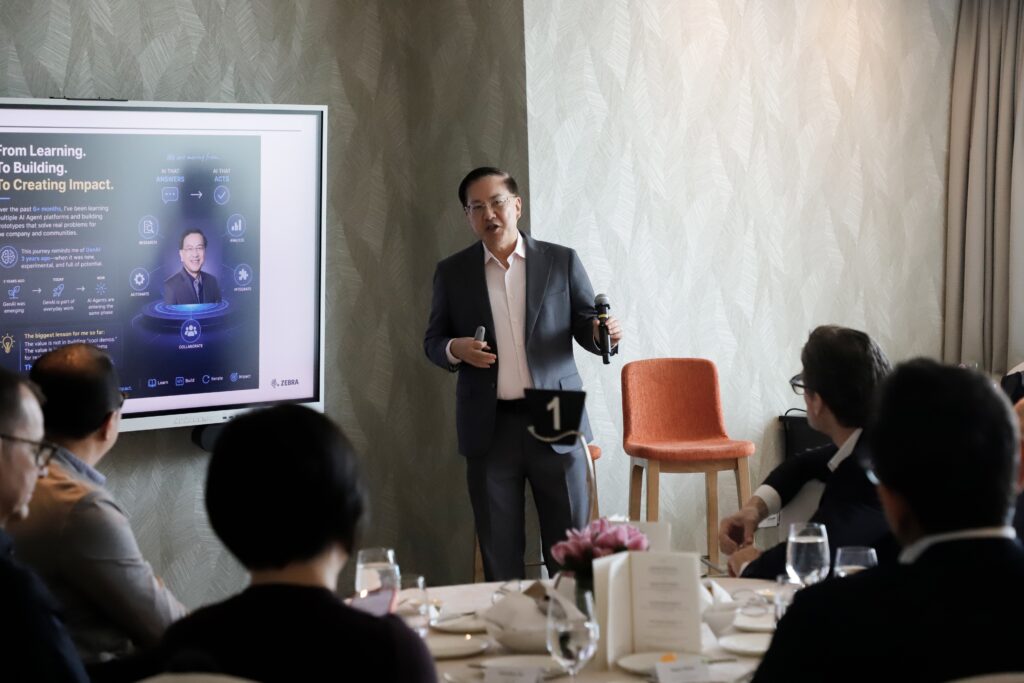
The workshop also featured practical enterprise adoption insights from Christanto Suryadarma from Zebra Technologies, who shared Zebra’s experience building and scaling enterprise GenAI capabilities across frontline and sales operations, including lessons around adoption, governance guardrails, and workflow integration.
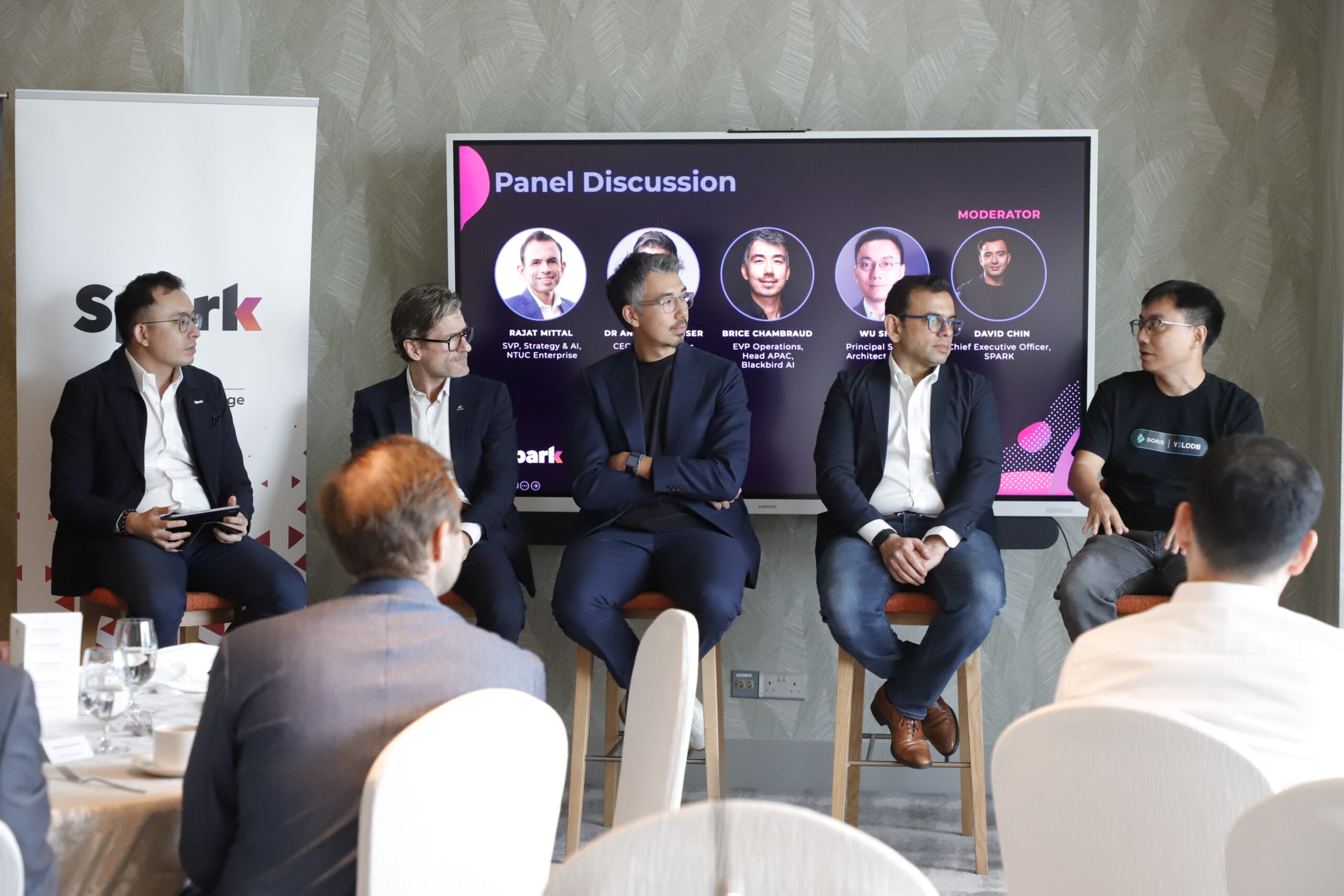
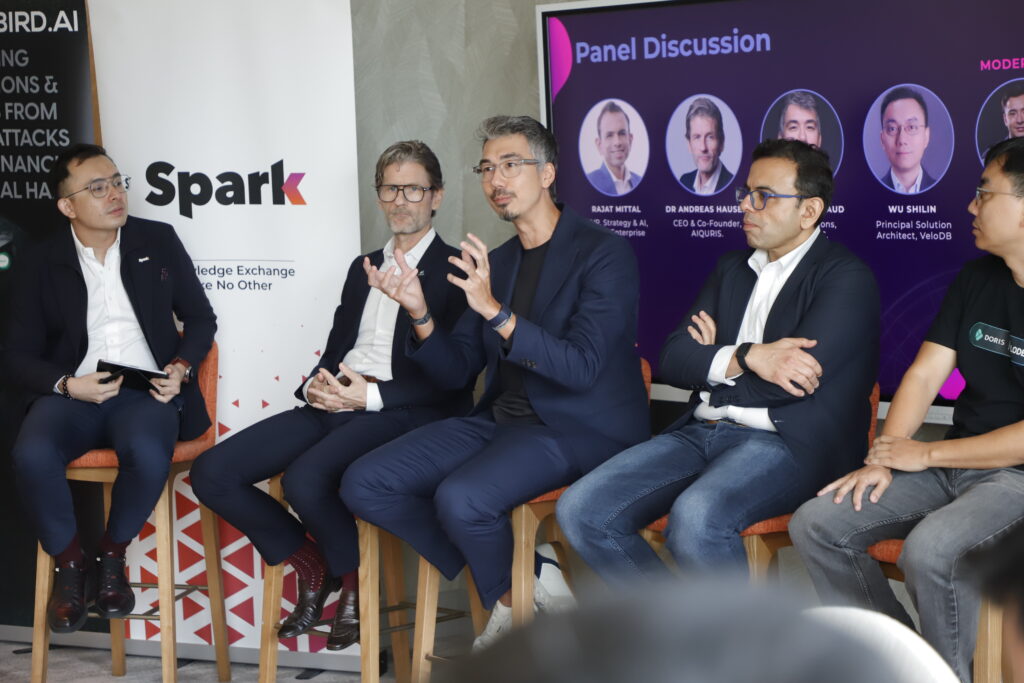
The panel discussion, moderated by David Chin, also featured Rajat Mittal from NTUC Enterprise, who shared perspectives on operationalising AI across large and diverse enterprise environments while balancing governance, business alignment, and organisational readiness.
Across the session, one message remained clear: the future of enterprise AI will not be defined solely by model capability, but by the ability of organisations to operationalise governance, modernise infrastructure, build trusted data foundations, and establish scalable operating models capable of supporting AI in production.
SPARK would like to thank Infocomm Media Development Authority, all participating speakers, partners, and attendees for contributing to such a candid and high-value discussion on the next phase of enterprise AI transformation.