As organisations continue to explore the possibilities of artificial intelligence, one reality is becoming increasingly clear: AI adoption is no longer just a technology conversation. It is now a business transformation conversation.
At the Executive Breakfast Roundtable, “Unlocking Enterprise Value: The Agentic AI Roadmap for CFOs and CIOs,” organised by SPARK in partnership with SAP and iCompaz, an Infosys and Temasek company, senior finance and technology leaders came together to examine how enterprises can move from experimentation to measurable business impact.
Hosted at the SAP campus, the session brought together CFOs, CIOs, finance leaders, technology leaders, and enterprise transformation stakeholders for a focused discussion on Agentic AI, modern ERP, enterprise governance, and the practical realities of scaling AI across the business.
A central theme emerged early in the conversation: while AI agents are increasingly visible across the enterprise technology landscape, measurable ROI remains elusive for many organisations. The challenge is not simply whether AI models are powerful enough. Rather, the real barriers often sit around the models: fragmented data, weak business context, governance concerns, system integration challenges, unclear ownership, and difficulty moving from pilots into production.
The roundtable also highlighted the important relationship between CFOs and CIOs in driving AI adoption. CFOs are focused on enterprise value, capital allocation, margin protection, cost visibility, and measurable returns. CIOs, meanwhile, are responsible for the data foundations, integration architecture, security, governance, and reliability required to make AI work safely and at scale.
For Agentic AI to succeed, both functions must be aligned from the outset.
Key Takeaways
1. AI needs to move from experimentation to measurable value
Many organisations are still navigating what was described as “paralysis in analysis.” Leaders recognise the potential of AI, but rapid technology changes can make it difficult to decide where to invest, how to govern, and when to scale.
The discussion reinforced that AI initiatives must be tied to business outcomes. Experimentation is valuable, especially for organisational learning, but pilots cannot remain open-ended. Companies need clear baselines, success metrics, and decision points to determine whether an AI initiative should be scaled, refined, or stopped.
For CFOs in particular, this means looking beyond enthusiasm for new tools and asking hard questions about value creation, cost reduction, productivity gains, risk management, and long-term enterprise impact.
2. The CFO and CIO partnership is critical
A recurring point throughout the session was that AI transformation cannot sit solely with the technology function. CFOs and CIOs need to work together to ensure that AI investments are both technically viable and commercially meaningful.
The CFO brings discipline around ROI, capital allocation, financial ownership, and enterprise value. The CIO brings the technical foundations needed for success: data quality, architecture, cybersecurity, platform decisions, integration, and governance.
This partnership becomes especially important in finance-related use cases, where accuracy, traceability, and auditability are non-negotiable. For areas such as financial close, budgeting, Accounts Payable, and Accounts Receivable, AI must be deployed with clear controls and consistent outputs.
3. Organisations should redesign processes, not just automate them
One of the strongest messages from the session was that AI should not simply be layered on top of existing inefficiencies.
Many AI programmes focus on automating fragments of work. This may make individual steps faster, but it does not necessarily remove handoffs, approvals, reconciliations, re-keying, or operational friction. In other words, the process becomes faster, but the underlying process remains the same.
The opportunity with Agentic AI is to rethink workflows from first principles. Organisations should ask what outcome a process exists to deliver, which steps truly add value, and which steps only exist because humans previously had to perform the work manually.
A practical starting point is to identify one inefficient process, establish a baseline, redesign it end to end, and then apply AI with a strong governance mindset. This creates a clearer path from business problem to measurable impact.
4. Trust, governance, and auditability must be built in from day one
The discussion made clear that trust is essential to enterprise AI adoption. This is especially true in regulated or high-risk environments, where AI systems must be secure, explainable, auditable, and aligned with business controls.
General-purpose AI tools may be useful for individual productivity, but enterprise use cases require a higher standard. AI agents that act within systems of record need permissions, guardrails, intervention rights, evaluation mechanisms, compliance controls, and clear accountability.
The need for deterministic outcomes was also raised in the context of finance. While generative AI is often non-deterministic by nature, finance processes require consistency and reliability. Organisations must therefore design AI systems carefully, ensuring that outputs can be trusted, reviewed, and governed.
5. AI FinOps will become increasingly important
As AI adoption grows, organisations will need better visibility into the full cost of AI deployment. The conversation highlighted that AI costs are not limited to tokens or model usage.
Enterprises must also account for governance, platform costs, delivery, service reliability, integration, monitoring, security, and ongoing management. For CFOs, this creates a need for clearer AI FinOps frameworks that can track both cost and value across the lifecycle of AI initiatives.
This is particularly important as token costs continue to decline and AI capabilities improve. While the economics of AI may create new opportunities for productivity and cost efficiency, organisations still need disciplined financial oversight to ensure that AI investments translate into real business value.
6. Enterprise context is the real differentiator
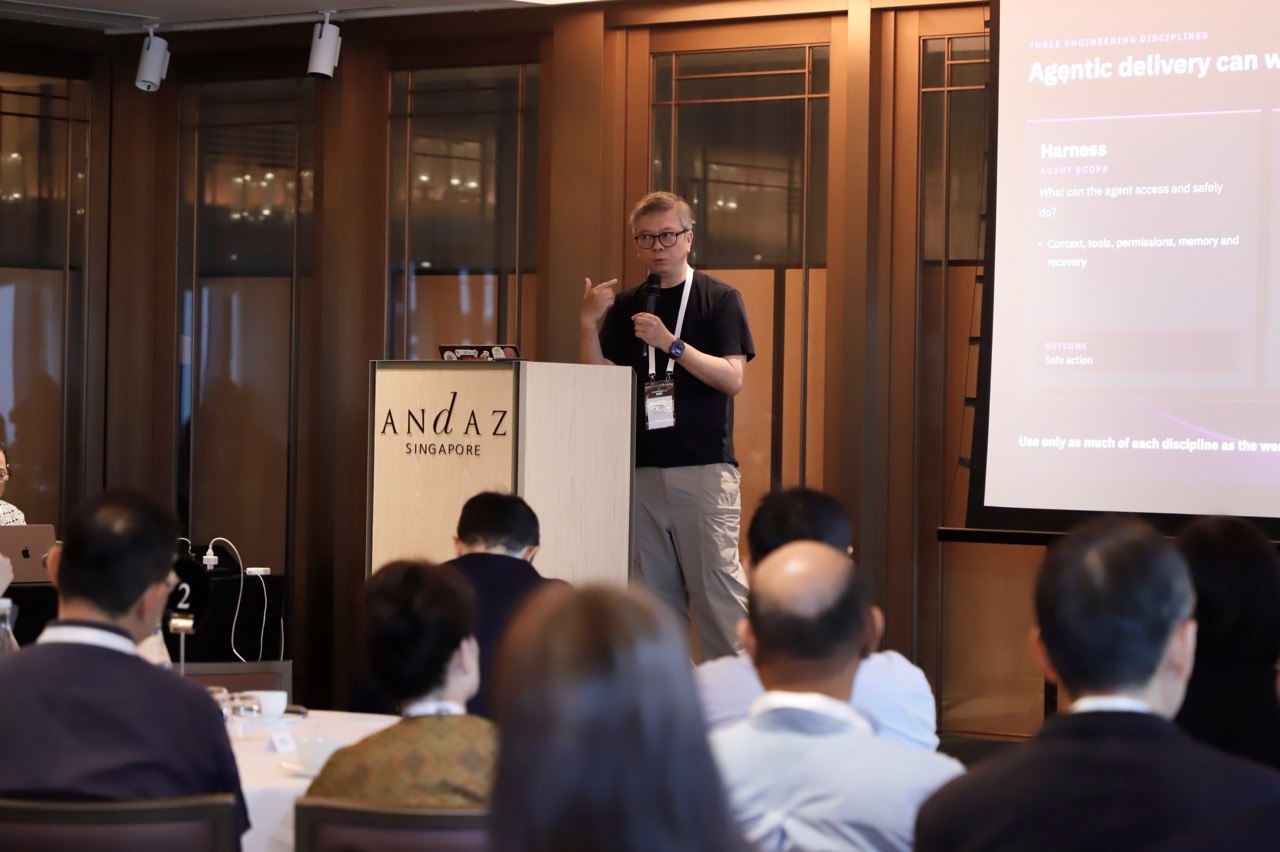
SAP’s keynote, delivered by Jack Wang, Head of APAC Digital Value Advisory, SAP, explored how organisations can realise cost efficiency with a modern, agent-first ERP. A key point was that enterprise AI needs more than powerful models. It needs deep process knowledge, semantically rich business data, and enterprise-grade governance.
SAP’s vision for the Autonomous Enterprise centres on a model where people set direction, agents execute, and the ERP governs. This approach embeds AI into core business processes while preserving the controls, traceability, and governance that enterprises require.
The discussion also covered the role of SAP Business AI, SAP Knowledge Graph, Joule, Industry AI, and the Autonomous Suite in helping organisations bring AI into the flow of work.
7. AI transformation requires people, process, and technology
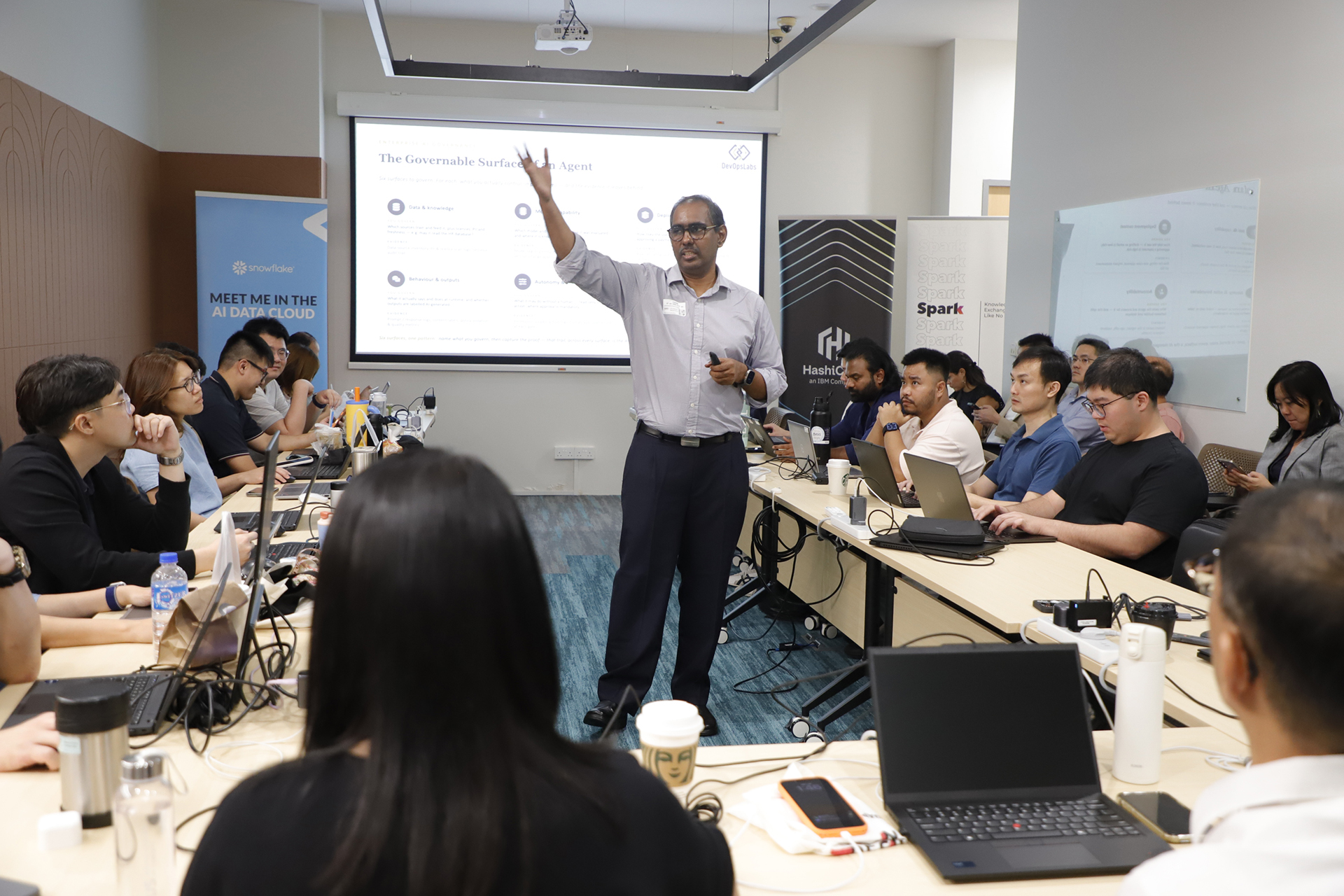
Bharani Srinivasan and Manikandan Ganesan from iCompaz shared how organisations can approach AI adoption through the Infosys AI First Value framework. The framework emphasises the importance of strategy, value realisation, data, process reimagination, legacy modernisation, and trusted AI foundations.
This reinforced a broader point: successful AI transformation is not just about selecting a model or platform. It requires a holistic approach that brings together technology, people, process redesign, governance, and change management.
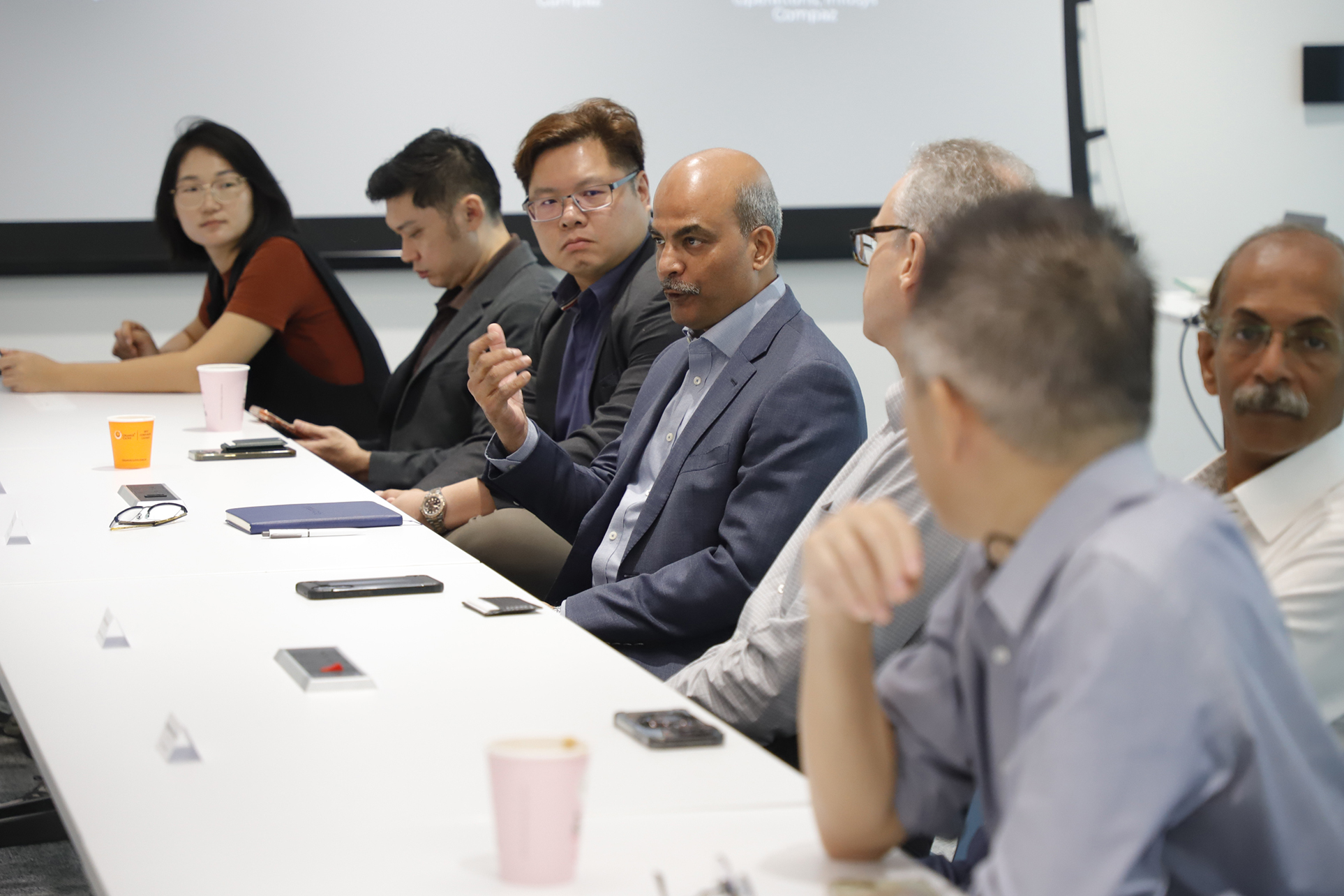
The session also surfaced practical challenges from organisations at different stages of AI maturity. Some are exploring finance automation and autonomous close. Others are looking at facility management, social outcomes, process standardisation, or workforce upskilling. These examples showed that there is no one-size-fits-all approach, but the principles remain consistent: start with a real business problem, define the outcome, and build the foundations for scale.
From Pilots to Production
The roundtable closed with a clear call to action. Organisations do not need to wait for perfect conditions before beginning their AI journey. However, they do need to start with discipline.
The recommended approach is clear:
- Pick one inefficient process.
- Establish a baseline.
- Redesign the process from first principles.
- Build governance into the design.
- Define ownership between finance and technology.
- Measure value clearly.
- Scale what works.
As Agentic AI continues to evolve, the enterprises that succeed will be those that combine ambition with control, experimentation with discipline, and innovation with trust. The future of enterprise AI is not just about deploying more agents. It is about building intelligent, governed, outcome-driven organisations that are ready to turn AI potential into lasting business value.