Artificial intelligence is moving beyond copilots that answer questions and generate content. The next phase of enterprise AI will involve autonomous agents that can plan, reason, coordinate tasks, interact with enterprise systems and take action on behalf of users. For organisations responsible for essential public services, this creates significant opportunities, alongside important questions about governance, accountability, security and trust.
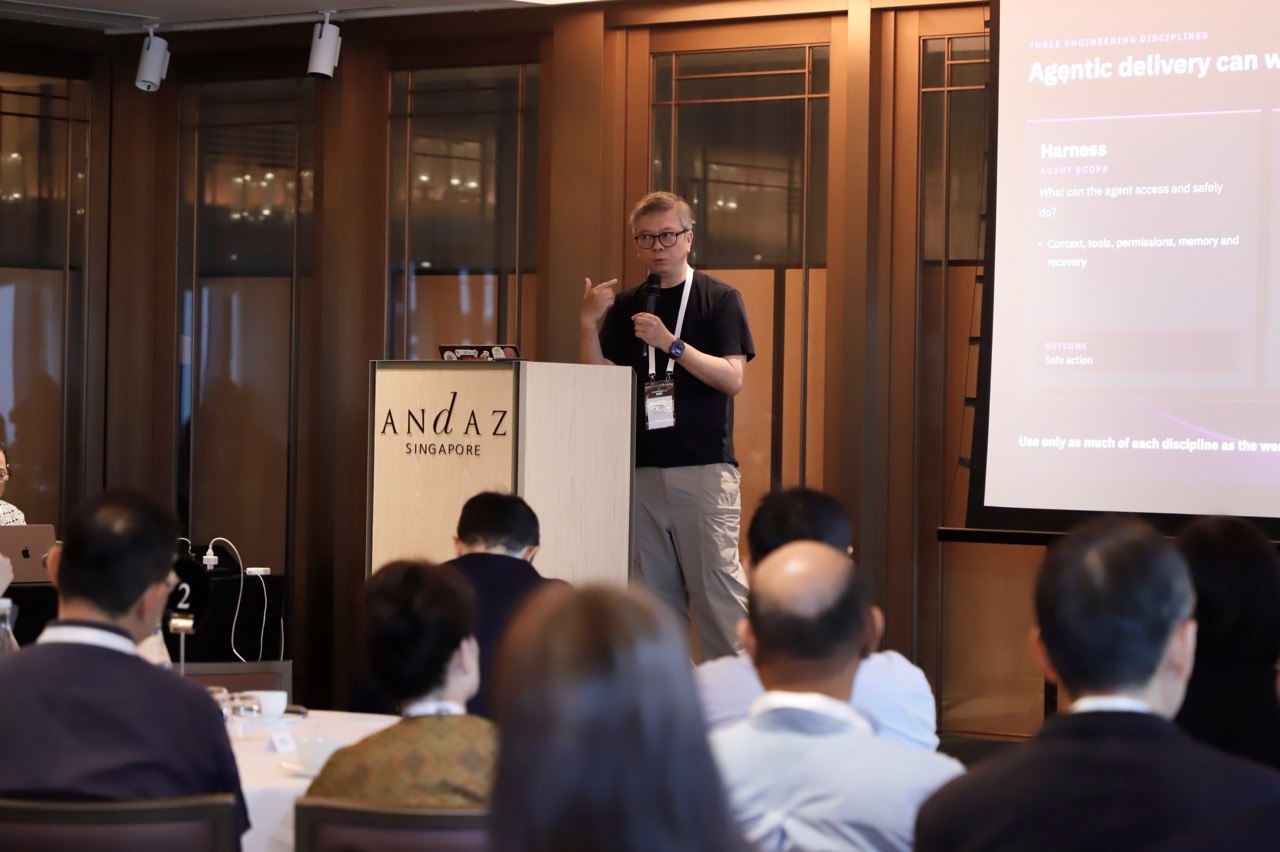
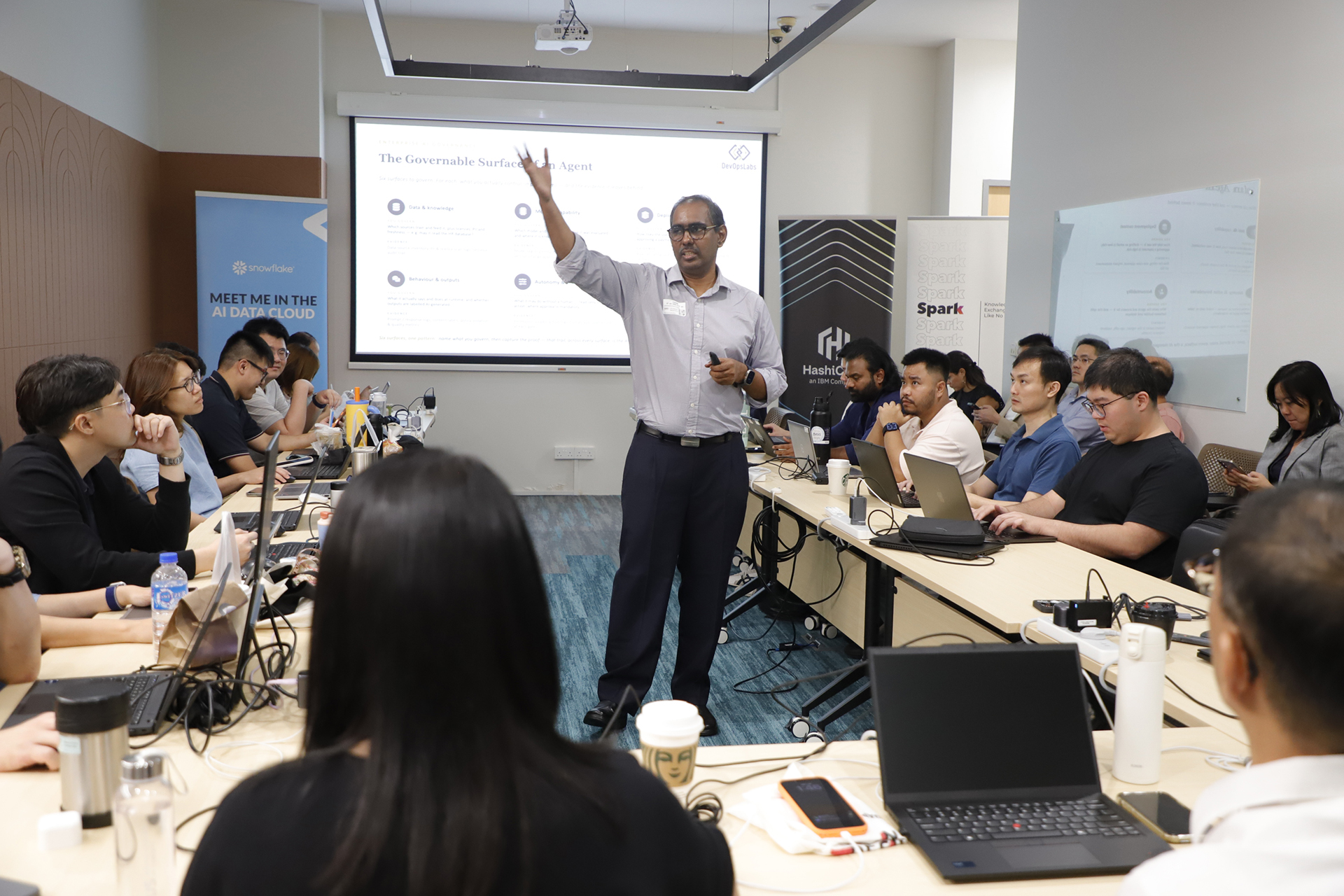
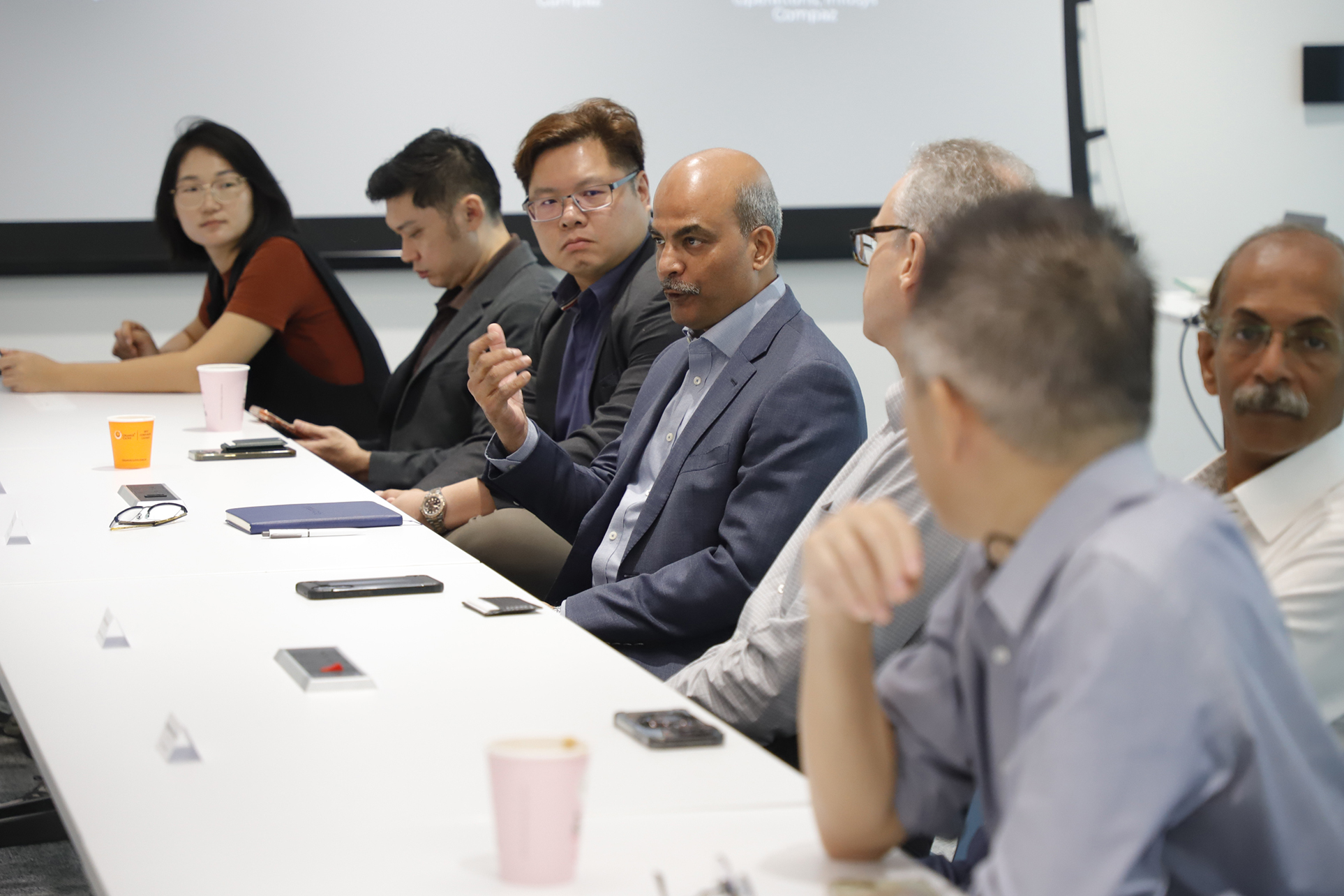
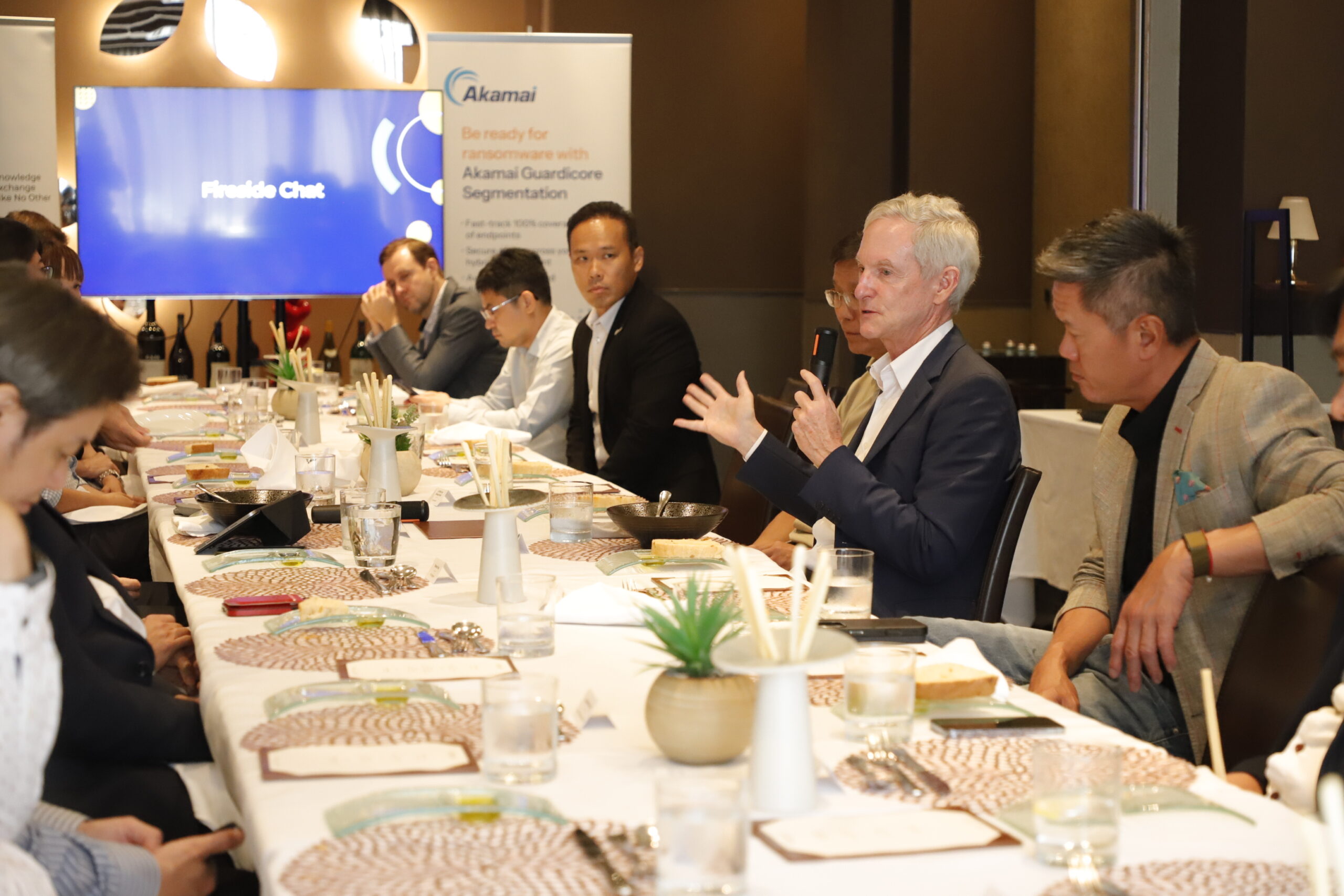
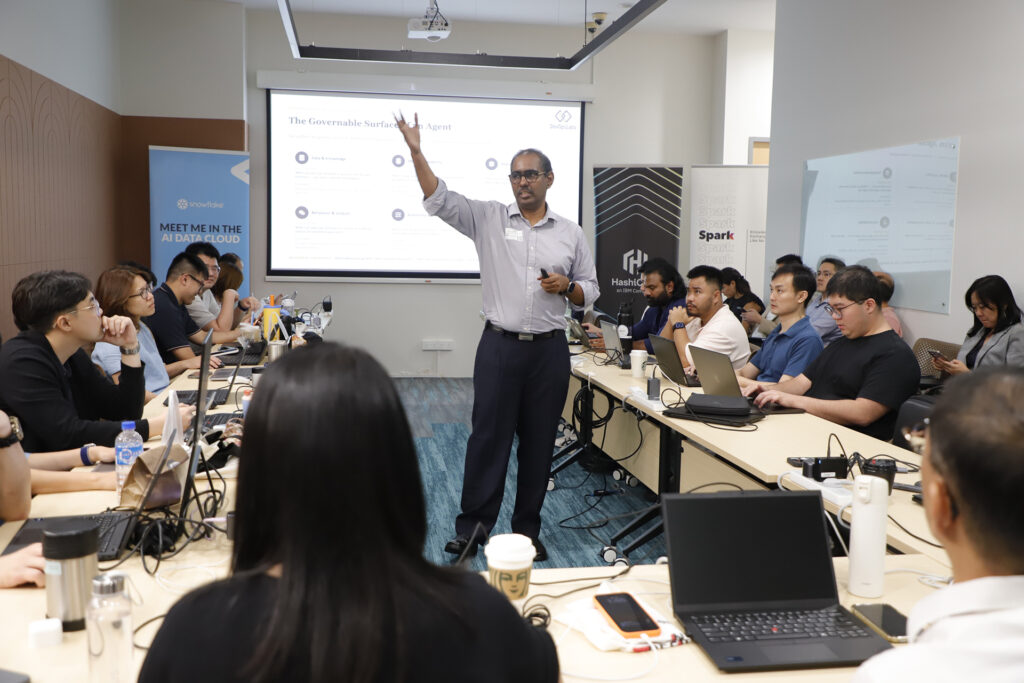
These themes were at the centre of SPARK’s VRLS 2.0 Agentic Transformation Lab, delivered in partnership with HashiCorp and Snowflake. The programme brought senior leaders together to explore how Singapore’s Vehicle Registration and Licensing System (VRLS) and OneMotoring could evolve from transactional digital services into more intelligent and proactive public platforms. The discussion focused not only on what agentic AI can do, but also on what organisations need to put in place before it can operate safely at enterprise scale.
Beyond Automation: A Different Operating Model
For decades, organisations have automated work through spreadsheets, workflow engines, robotic process automation and, more recently, generative AI. Agentic AI marks a further shift. Instead of responding only to prompts, agents can interpret information, reason towards objectives, collaborate with other specialised agents and carry out tasks through enterprise applications, while operating within defined boundaries.
Throughout the workshop, speakers encouraged leaders to think of agents as digital employees rather than conventional software. Like human employees, agents need clear identities, responsibilities, permissions, reporting structures and supervision. Their effectiveness depends not only on the capabilities of the underlying model, but also on how well the surrounding operating environment is designed. Enterprise transformation is therefore no longer simply about deploying a chatbot. It involves creating coordinated digital workforces that support human teams while remaining transparent, predictable and accountable.
Designing Public Services Around Outcomes
One of the workshop’s central discussions examined how governments currently design digital services. Most citizen portals remain reactive: users navigate websites, find the appropriate forms, submit information and wait for a response. Agentic AI could support a more proactive model, in which systems recognise relevant events, anticipate citizens’ needs, coordinate processes and guide users through complex decisions.
Using potential VRLS applications as examples, participants explored how specialised agents could work together across the vehicle ownership lifecycle. Rather than issuing generic reminders, agents could assess eligibility, calculate available options, coordinate supporting processes and prepare recommendations for citizens to review.
This does not mean removing human oversight. Participants stressed that critical decisions, particularly those involving financial transactions or changes to official records, must continue to require explicit human approval. AI can support and accelerate decision-making, but accountability remains with people.
Governance Must Become an Engineering Discipline
One of the clearest messages from the workshop was that governance cannot remain confined to policy documents. As AI agents begin interacting directly with enterprise systems, governance must be built into the architecture, infrastructure, identity controls and day-to-day operation of those systems.
The afternoon sessions introduced a framework based on four continuous activities: defining operational boundaries, observing agents during execution, enforcing guardrails automatically and maintaining auditable records of significant actions. This reflects the wider move from static governance frameworks towards policy-driven controls that respond to context, user identity, workload and risk in real time.
For technology leaders, the questions are practical: Which systems can an agent access? What actions can it perform independently? When is human approval required? How can the organisation demonstrate compliance months after an action has taken place? Increasingly, the answers must be found in code, access permissions, audit logs and runtime monitoring, not only in written policies.
Identity as the Foundation of Enterprise AI
Several sessions highlighted machine identity as an increasingly important part of enterprise AI. Traditional security systems were designed primarily around human users, while agentic environments may involve thousands of autonomous identities operating across multiple systems at the same time. Each identity requires authentication, least-privilege access, traceability and clear ownership.
Participants discussed approaches in which agents receive temporary credentials only when required, carry out approved actions on behalf of users and relinquish access once the task is complete. This makes each interaction attributable and reduces the risk created by permanent permissions. It also reflects the wider shift from perimeter-based security towards identity-centred security as autonomous systems operate across applications, data environments and cloud platforms.
AI Success Depends on More Than the Model
The workshop also looked beyond the capabilities of individual AI models. Successful enterprise AI depends on the wider architecture supporting them, including orchestration engines, data platforms, retrieval systems, workflow services, observability and security controls.
Participants also recognised that agentic AI should not be applied to every process. Traditional applications, deterministic software and workflow automation remain better suited to predictable tasks with clearly defined rules. Agentic AI is most useful where work requires judgement, contextual reasoning, collaboration or adaptation.
Future enterprise environments are therefore likely to combine conventional software and autonomous agents, with each used according to the complexity of the task, its operational risk and the outcome required.
Building Trust Before Scale
Across the sessions, a consistent point emerged: the main constraint on enterprise AI is not simply model capability, but organisational trust. That trust depends on strong governance, security, transparency and confidence that autonomous systems will continue to operate in line with organisational objectives.
It cannot be added after deployment. Trust must be built into the system from the beginning through identity management, layered guardrails, comprehensive observability, human oversight and continuous governance. For public sector organisations, where automated decisions can have a direct impact on citizens, these measures are essential.
Closing Thoughts
The next phase of digital transformation will not be defined by larger language models alone, but by how effectively organisations govern autonomous intelligence. Agentic AI could enable more proactive citizen services, better coordination across agencies and improved operational efficiency. Realising that potential, however, will require the right infrastructure, governance and operational discipline.
The organisations that lead this next phase will not simply be those that build the most capable AI systems. They will be those that build systems people can trust.