
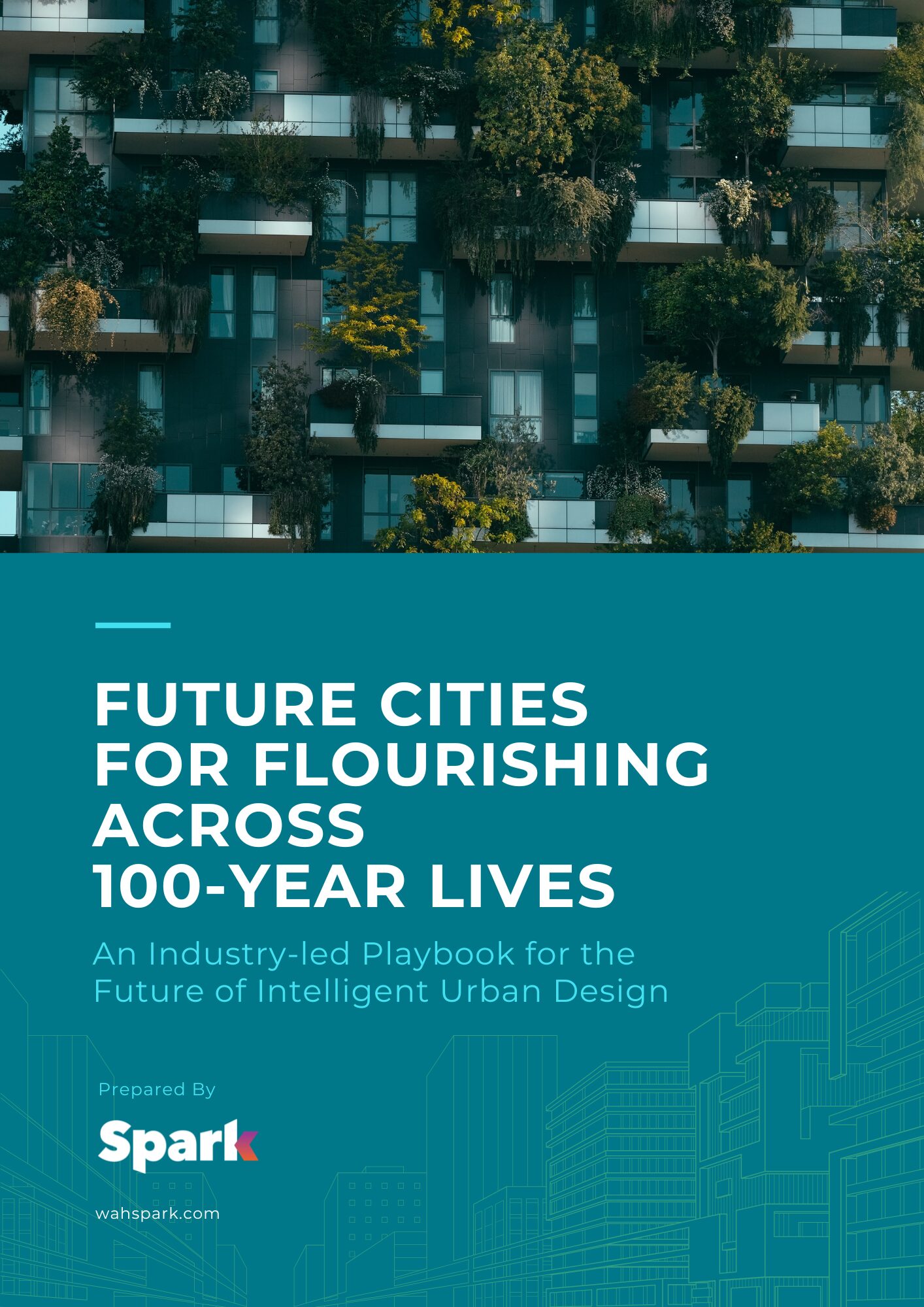
In 2026, the global urban landscape faces a systems-level shift, moving away from static infrastructure toward dynamic platforms that support 100-year lifespans and human flourishing across a multi-stage life.
Read the Executive Summary of the Industry-led Playbook for Intelligent Urban Design for the latest strategic levers and urban evolution trends, including:
- 100-Year Lifespan New benchmark for global urban systems design.
- 8 Urban Sandboxes Structured experiments for commercial & social viability.
- 4 Design Levers Multi-Stage Life, Systemic Design, Asset Resilience, & AI.
- Fluid Evolution Replacing the traditional 3-stage life model.
- 1st Systemic Integration Housing, mobility, and health as interdependent platforms.
Envisioning a Future City
As 100-year lifespans become common, cities face a systems-level opportunity to rethink how environments support lifelong flourishing.
We must shift from static service provision to dynamic, human-centered design enabling new ways of living, working, and relating across a century-long life arc.
Imagining Multi-Stage Life Journeys
- Adaptive Life PathsThe linear progression of education, work, and retirement is giving way to a more fluid life course. People will cycle through phases of learning, working, caregiving, and reinvention multiple times over their lifespan.
- Lifelong ReinventionEducation will no longer be front-loaded. Reskilling and personal growth will be vital for relevance. Cities must offer environments that support exploration, mobility, and flexible
career transitions.
The Digital Layer: Enabling Success
| I. Ambient Intelligence Sentient Environments: Real-time environmental sensing to adjust lighting and soundscapes, lowering cortisol and providing empirical feedback on urban efficacy. | II. Agentic Al Navigators Life Agents: Personalized secure Al co- pilots helping residents navigate career pivots and learning pathways while managing “skill liquidity” in the gig economy. |
| III. Sovereign Identity Digital Identitty Wallets: Immutable digital identities where citizens own their credentials and health records, enabling frictionless trust and mobility across stages. | IV. Unified Common Standards Digital-Physical Integration: Shared i protocols allowing robotic systems to reconfigure spaces (e.g., kindergarten by day, clinic by eve). |
Generative Lifepath Simulation
e.g. Move beyond 3D models to physics-based simulations of how diverse humans experience
streetscapes over decades.)